Every manhole, wet well, and lift station your crew enters is a confined space, and confined spaces are where small mistakes turn deadly. Invisible gases can build up, oxygen can drop without warning, and a worker out of sight is a worker out of reach. The good news is that the right gear makes entry far safer and keeps your team in compliance. This guide covers confined space safety for sewer crews in plain terms: the hazards you cannot see, the gas detection equipment that warns you in time, and the communication gear that keeps every worker connected.
What gear do sewer crews need for confined space entry? At a minimum, sewer crews need a calibrated multi-gas monitor (commonly a 4-gas detector for oxygen, combustible gas, carbon monoxide, and hydrogen sulfide), a way to test the air before and during entry, reliable two-way communication, and a trained attendant at the opening. Follow your written permit-space program and OSHA requirements.

Why Sewers Are So Dangerous to Enter
A sewer or wet well is a textbook permit-required confined space. It is big enough to enter, it is not designed for someone to work in continuously, and it has limited ways in and out. On top of that, it can hold hazards that a worker cannot detect with their own senses. That combination is why confined space entry needs a plan and the right equipment every single time.
The hazards you cannot see
Several gas hazards are common in sewer environments. Hydrogen sulfide builds up from decaying waste and is deadly at levels that quickly deaden your sense of smell, so you cannot rely on the rotten-egg odor to warn you. Methane and other combustible gases can collect and create an explosion risk. Oxygen can drop to unsafe levels, or rise to a level that increases fire risk. Carbon monoxide can drift in from engines and equipment running nearby. None of these give a reliable warning to an unprotected worker, which is exactly why air monitoring is non-negotiable.
Step One: Gas Detection
You cannot manage a hazard you cannot measure. A gas monitor tests the air before anyone enters and keeps testing while work continues. The standard tool is a multi-gas monitor, often a 4-gas unit that watches oxygen, combustible gas, carbon monoxide, and hydrogen sulfide at the same time.
Choosing a gas monitor
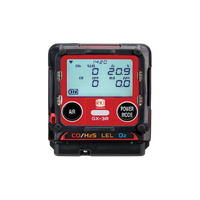
Different jobs call for different monitors. For routine entries, a compact personal 4-gas monitor that a worker clips on is the everyday tool. The RKI GX-3R is a confined space 4-gas monitor built for exactly this. For testing the air at the bottom of a space before anyone goes in, a sample-draw monitor with a pump and hose lets you check the atmosphere from the surface. RKI units like the GX-6000 and the Eagle series offer sample-draw and expanded sensor options for tougher jobs. Haaker carries the full RKI gas detection lineup, so you can match the monitor to how your crew works.
Calibrate, bump test, and keep records
A monitor only protects your crew if it actually works. Bump test the unit before each use to confirm the sensors and alarms respond, and calibrate on the schedule the manufacturer sets. Keep records of testing and calibration. These habits are part of a sound safety program and they hold up if you ever have to show your work. Haaker’s team can help you set up a testing and calibration routine that fits your fleet.
Step Two: Communication
Gas detection warns you of the air. Communication keeps the crew connected once the work starts. In a confined space, the entrant is often out of sight and surrounded by noise from pumps, traffic, and equipment. A trained attendant has to stay in constant contact with the entrant and be ready to call for help. Hand signals and shouting do not cut it when an emergency starts.
Hands-free, two-way headsets
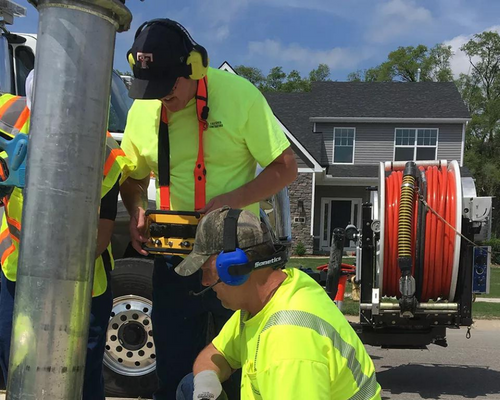
Wireless headset systems let the attendant and entrant talk naturally, hands-free, without removing hearing protection. Sonetics wireless headsets offer full-duplex communication, which means everyone can talk and listen at once, like a phone call instead of a push-to-talk radio. That matters when seconds count. The headsets also protect hearing in loud work zones while listen-through technology lets workers still hear alarms, traffic, and warnings around them. For a crew running a sewer truck and working a manhole at the same time, clear communication is a safety tool, not a luxury.
Step Three: Reduce the Number of Entries
The safest confined space entry is the one you never have to make. Remote inspection tools let crews see inside a line without sending a person in. A push camera or a sewer inspection crawler can locate a blockage, check a pipe’s condition, or confirm a repair from the surface. Pairing inspection cameras with your cleaning equipment means fewer entries, less risk, and faster diagnosis. It is one of the simplest ways to cut confined space exposure across a whole program.
A Pre-Entry Decision Framework
Use this quick checklist before any confined space entry. It does not replace your written permit-space program or OSHA requirements, but it keeps the basics front of mind.
- If you have not tested the air, do not enter. Test from the surface first with a calibrated monitor.
- If the monitor alarms, do not enter. Ventilate, retest, and only proceed when readings are safe.
- If you cannot maintain communication, do not enter. Set up two-way contact between the entrant and attendant first.
- If there is no trained attendant at the opening, do not enter. Someone has to stay outside and monitor the entrant.
- If you can inspect remotely instead, do that first. A camera may answer the question without an entry at all.
- In every case, follow your written permit-space program and the OSHA standard for your work.
Frequently Asked Questions
What gases do sewer crews need to test for?
Sewer crews most often test for four gases at once: oxygen (too low or too high), combustible gases like methane, carbon monoxide, and hydrogen sulfide. A 4-gas monitor watches all four together. Some jobs need extra sensors, which is where expanded units like the RKI GX-6000 come in.
What is a 4-gas monitor?
A 4-gas monitor is a single device that measures oxygen, combustible gas, carbon monoxide, and hydrogen sulfide at the same time and alarms when any reading is unsafe. It is the standard tool for confined space entry in sewer and utility work. The RKI GX-3R is one example built for confined space use.
Why is hydrogen sulfide so dangerous in sewers?
Hydrogen sulfide builds up from decaying waste and is deadly at higher levels. Its rotten-egg smell fades fast as levels rise, so workers cannot rely on their nose to warn them. That is why continuous gas monitoring, not human senses, is the only safe way to detect it.
Do I need communication gear for confined space entry?
Yes. A confined space program requires constant contact between the entrant and a trained attendant. Hands-free, full-duplex headsets like Sonetics let the crew talk naturally without removing hearing protection, which is far safer than shouting or push-to-talk radios when an emergency starts.
How can I reduce confined space entries?
Use remote inspection tools. A push camera or sewer crawler lets crews locate blockages, check pipe condition, and confirm repairs from the surface, so fewer workers have to enter. Fewer entries means less risk across your whole program.
The Bottom Line
Confined space safety for sewer crews comes down to three things: detect the air, stay connected, and avoid entries you do not need. Start every job with a calibrated multi-gas monitor and test before anyone goes in. Keep the entrant and attendant in constant, hands-free contact. And use inspection cameras to answer questions from the surface whenever you can. Pair good gear with a written permit-space program and your crew goes home safe.
Why Order Your Confined Space Safety Gear From Haaker Equipment Company
Haaker Equipment Company has equipped municipal, industrial, and utility crews across California, Nevada, and Arizona since 1972, with seven locations and factory-trained support. We carry RKI gas detection equipment, Sonetics wireless headsets, and Envirosight sewer inspection cameras, so you can build a complete confined space safety setup from one trusted source. For the federal requirements that govern this work, see the OSHA confined spaces standard. Nobody works harder for you.
Want help building a confined space safety kit for your crew? Explore our gas detection equipment, call 909-598-2706, or contact Haaker Equipment to schedule a free demo at one of our seven locations.