Elgin makes both mechanical broom sweepers and regenerative air sweepers, and the decision between the Pelican and the Crosswind is one Haaker’s team works through with customers regularly. These are not two versions of the same machine — they use fundamentally different sweeping technologies, perform differently across debris types, and are designed for different route profiles.
If you’re evaluating which Elgin model belongs in your fleet, understanding the core difference between how these two machines work is the right place to start.
How They Work: Different Technologies, Different Strengths
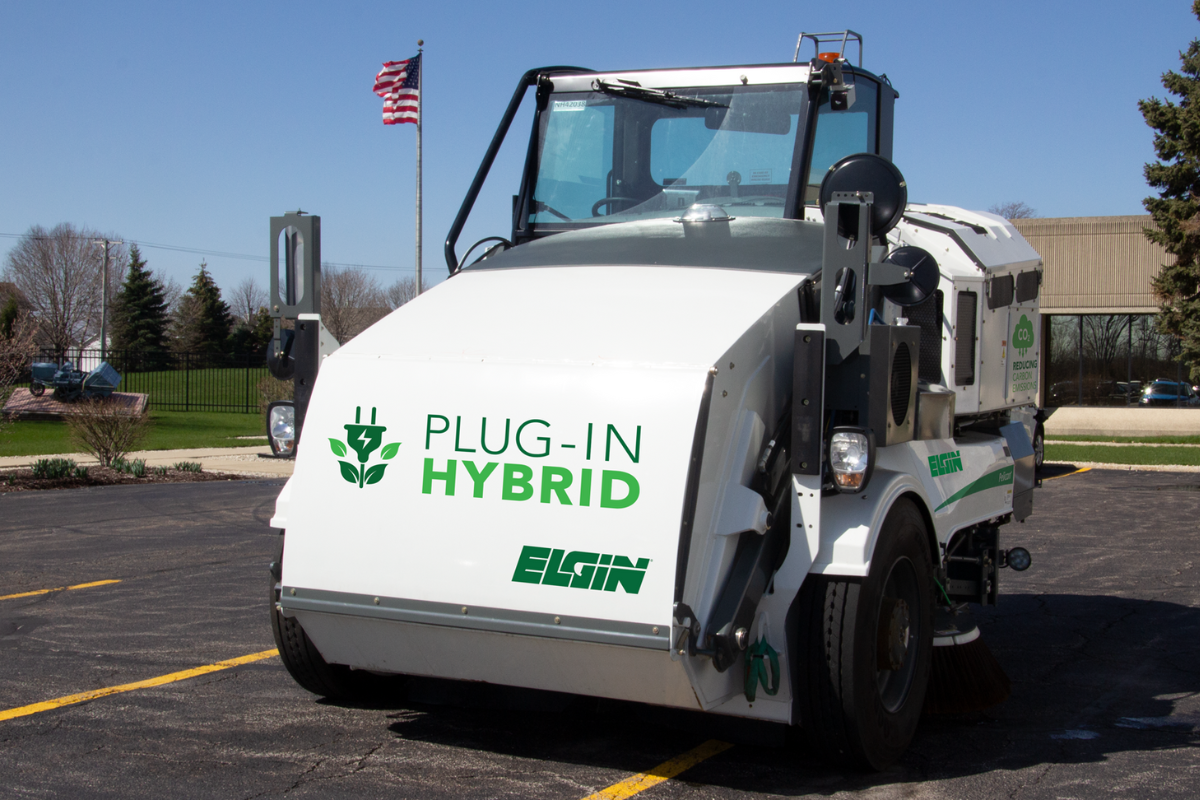
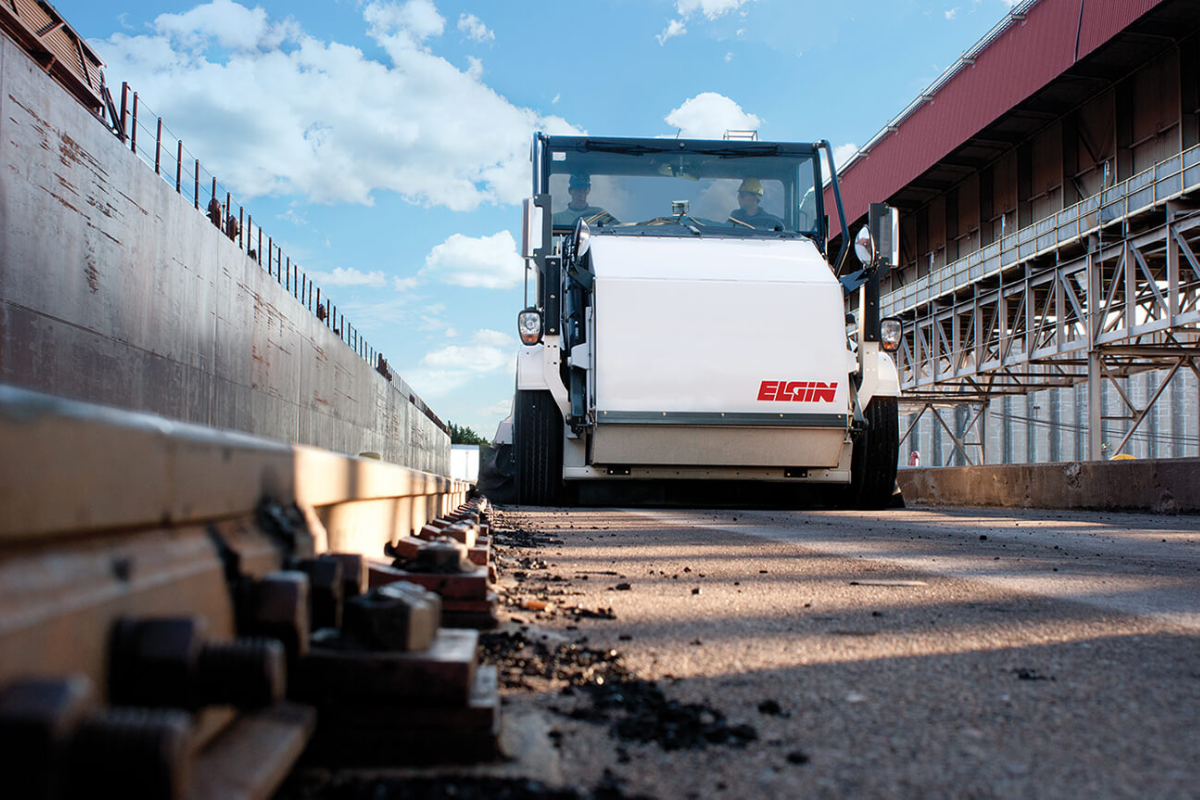
The is a mechanical broom sweeper. It uses rotating gutter brooms to move debris toward the center of the sweeping path and a main broom to collect material into the hopper. The brooms make direct physical contact with the road surface. Water is used for dust suppression. The Pelican is a three-wheel platform — one of the most widely deployed mechanical sweepers in North American municipal fleets — with a chassis design that prioritizes maneuverability and visibility above all else.
The Elgin Crosswind is a regenerative air sweeper. It generates high-velocity airflow through a powerful fan system that lifts debris off the surface and carries it into the hopper through suction. There are no brooms contacting the road surface. The airstream recirculates through the system and captures fine particulates that mechanical brooms can miss or scatter.
These two cleaning methods produce meaningfully different results depending on what’s on the street. Matching the technology to your debris conditions is what determines whether your sweeper performs — or struggles.
The Elgin Pelican: Broom Sweeper Built for Maneuverability
The Pelican’s three-wheel chassis gives it a turning radius that no four-wheel machine can match. That’s a genuine operational advantage on residential streets, cul-de-sacs, narrow lanes, and parking lots where tight corners and parked cars define every block. The same design delivers 360-degree visibility from the cab — a safety advantage in pedestrian-heavy neighborhoods, school zones, and downtown corridors with heavy foot traffic.
Single-lane operation and single-lane dumping are built into the Pelican’s design, which matters on streets where a larger machine would need to block traffic or make multiple repositioning passes.
As a mechanical sweeper, the Pelican handles heavy, bulky debris that air sweepers struggle with. Compacted dirt, gravel, asphalt millings, wet leaves, and branches are all in its wheelhouse. Post-construction cleanup and fall leaf pickup are natural applications.
Pelican is the right choice when:
- Residential streets, narrow lanes, and cul-de-sacs make up the majority of the route
- Tight maneuverability is a daily operational requirement
- 360-degree cab visibility matters for safety in pedestrian-dense environments
- Single-lane operation and dumping are route requirements
- Heavy, bulky, or wet debris is common on the route
- Post-construction cleanup is part of the program
The Elgin Crosswind: Air Sweeper Built for Production
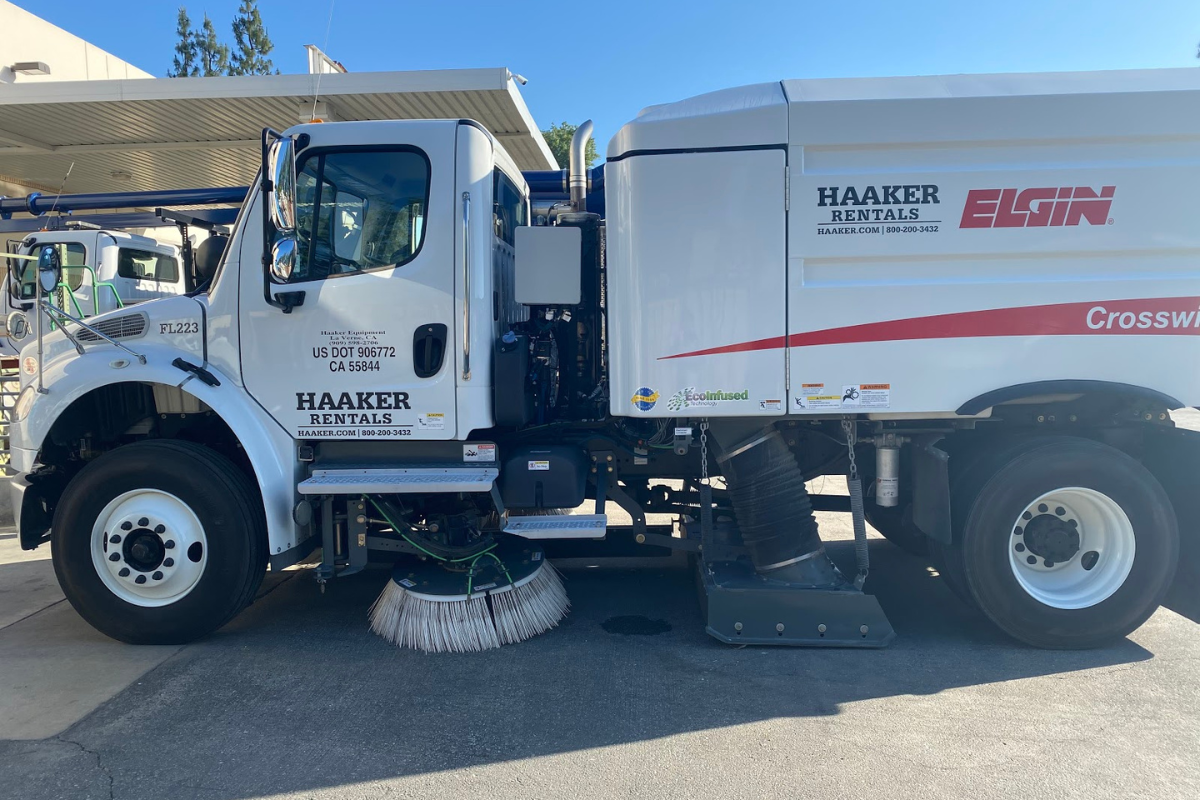
The Crosswind is a single-engine regenerative air sweeper mounted on a Class 7 truck chassis, designed for production sweeping across larger, more open areas. Arterial streets, highways, airport aprons, and commercial corridors — routes where covering ground efficiently is the primary performance measure — are where the Crosswind earns its keep.
Fine particulate matter is where air sweeping has a well-established advantage over broom technology. Sand, grit, dust, and small particles are captured by the airstream in ways that brooms can scatter or miss at surface irregularities. For municipalities managing stormwater quality and PM-10 particulate compliance, the Crosswind’s fine particulate capture rate is operationally significant.
Single-button operation reduces operator training time and supports consistent performance across crews with varying experience levels — a real-world advantage for fleets managing turnover or seasonal staffing.
Crosswind is the right choice when:
- Arterial streets, highways, commercial corridors, or airport aprons are the primary route type
- High daily production — maximum coverage per shift — is the performance priority
- Fine particulate capture and PM-10 stormwater compliance are program requirements
- Simplified operator training and consistent crew performance matter
- Debris is predominantly fine — sand, grit, dust, light litter
Side-by-Side Comparison
| Factor | Elgin Pelican (Broom) | Elgin Crosswind (Air) |
|---|---|---|
| Sweep technology | Mechanical brooms | Regenerative air |
| Chassis configuration | Three-wheel | Four-wheel, Class 7 truck |
| Turning radius | Excellent — tightest in class | Good |
| Cab visibility | 360-degree | Standard |
| Best route type | Residential, narrow lanes | Arterials, highways, airports |
| Heavy / bulky debris | Yes — built for it | Limited |
| Wet debris | Yes | Limited |
| Fine particulate / PM-10 | Good with water suppression | Strong — air capture |
| Daily production coverage | Moderate | High |
| Single-lane dumping | Yes | No |
| Operator training | Standard | Single-button — simple |
How to Decide
The debris profile on your routes is the clearest decision factor. If your streets see heavy debris — millings, gravel, compacted dirt, wet leaves, post-construction material — the Pelican’s mechanical broom action handles those conditions in a way the Crosswind’s airflow cannot match. If your routes are predominantly fine particulate and your program includes stormwater PM-10 compliance requirements, the Crosswind’s air capture performance is the right tool.
Route geometry matters too. Tight residential streets with frequent turns and parked cars play to the Pelican’s maneuverability advantage. Long, open arterial runs play to the Crosswind’s production efficiency.
Many municipal fleets run both for exactly this reason. The Crosswind covers the arterial and commercial network where production and particulate compliance drive the program. The Pelican handles residential neighborhoods and anywhere tight access or heavy debris make a mechanical sweeper the practical choice.
Talk to the Haaker Team
As the authorized Elgin dealer for Southern California and Nevada, Haaker Equipment carries the full Elgin lineup including both the Pelican and the Crosswind. We can arrange on-route demonstrations of either machine and pull comparable fleet data from similar municipalities to support your evaluation.
View the Elgin Pelican | See the Elgin Crosswind | Contact Our Team
Frequently Asked Questions
What is the difference between the Elgin Pelican and the Elgin Crosswind?
The Pelican is a three-wheel mechanical broom sweeper that uses rotating brooms to collect debris. It excels at heavy, bulky, and wet debris on residential streets and tight-access routes. The Crosswind is a regenerative air sweeper that uses high-velocity airflow to collect fine particulate and mixed debris on arterials, highways, and open commercial routes. They use different sweeping technologies and are built for different operating environments.
Is the Elgin Pelican an air sweeper or a broom sweeper?
The Elgin Pelican is a mechanical broom sweeper, not an air sweeper. It uses rotating gutter brooms and a main pickup broom to collect debris into the hopper, with water for dust suppression. The Elgin Crosswind is the air sweeper in Elgin’s lineup, using regenerative air technology to collect debris without brooms contacting the road surface.
Which Elgin sweeper is better for residential streets?
The Elgin Pelican is generally better suited for residential routes. Its three-wheel chassis delivers the tightest turning radius in its class, 360-degree cab visibility, and single-lane operation capability — all important for narrow residential streets with parked cars and pedestrian traffic. Its mechanical broom system also handles the heavier debris loads common on residential routes.
Which Elgin sweeper is better for stormwater compliance?
For PM-10 fine particulate compliance, the Elgin Crosswind has an advantage. Regenerative air sweepers are recognized for superior fine particulate capture compared to mechanical brooms. Contact Haaker Equipment to discuss your specific permit requirements and route conditions.
Does Haaker Equipment carry both the Elgin Pelican and the Crosswind?
Yes. Haaker Equipment is the authorized Elgin dealer for Southern California and Nevada and carries the full Elgin lineup including both the Pelican broom sweeper and the Crosswind air sweeper. Haaker also provides OEM Elgin parts and factory-authorized service for both models.
Haaker Equipment Company has been the authorized Elgin dealer for Southern California and Nevada since 1972. Nobody works harder for you.