The nozzle is the smallest part of your sewer jetting setup, and it makes the biggest difference in how a job goes. The right sewer jetting nozzle clears the line fast, scours the pipe wall, and pulls your hose through with ease. The wrong one wastes water, leaves debris behind, and turns a 20 minute job into an afternoon. This guide breaks down the main nozzle types, what each one does best, and how to match a nozzle to your jetter and the blockage in front of you, so your crew picks the right tool every time.
How do you choose a sewer jetting nozzle? Match the nozzle to three things: the pipe size, the type of debris (grease, roots, sand, or hard scale), and your jetter’s rated flow and pressure. Use penetrating nozzles to break through blockages, flushing nozzles for routine cleaning, and rotating or cutter nozzles for grease and roots.

How a Sewer Jetting Nozzle Works
A sewer jetter pushes high-pressure water through a hose to a nozzle at the end. The nozzle turns that water into focused jets. Rear-facing jets create thrust that drives the nozzle forward through the pipe and pulls the hose behind it. Those same jets blast the pipe wall and flush loosened debris back toward the manhole. Some nozzles add a few forward-facing jets to punch through a solid blockage first.
The two numbers that matter most are flow and pressure. Flow is measured in gallons per minute (GPM) and does the heavy lifting of moving debris. Pressure is measured in pounds per square inch (PSI) and does the cutting. Every nozzle is rated for a flow and pressure range, and it has to match what your jetter puts out. A nozzle sized wrong for your machine will underperform no matter how good it is.
The Main Types of Sewer Jetting Nozzles
There is no single best nozzle. Crews carry several and switch based on the job. Here are the main categories and what each one is built for.
Penetrating nozzles
Penetrating nozzles, sometimes called blasting nozzles, are built to punch through a hard blockage and open a path. They put more energy into forward and steep-angle jets so they can bore into packed debris, ice, or a full stoppage. Once the line is open, crews often switch to a flushing nozzle to finish the cleaning. Reach for a penetrating nozzle when a line is completely plugged and you need to restore flow first.
Flushing and cleaning nozzles
Flushing nozzles are the everyday workhorse for routine line maintenance. Most of their jets face backward at a wide angle to scour the full pipe wall and sweep sediment, sludge, and small debris back to the manhole. They are the right pick for scheduled cleaning, sand and grit removal, and general line maintenance where the pipe is not fully blocked.
Rotating nozzles
Rotating nozzles spin the water jets as they travel down the line. That spinning action attacks grease, soap, scale, and hardened buildup that a fixed nozzle can leave behind. They are a strong choice for grease-heavy commercial lines and any pipe with a stubborn coating on the wall. The trade-off is that they need the right flow and pressure to spin correctly, so match them carefully to your jetter.
Root-cutting nozzles
Roots are their own problem. Standard water jets will not cut through a heavy root mass. Root-cutting nozzles use spinning chains or mechanical cutters powered by the water flow to physically shear roots from the pipe wall. They are the tool for lines with repeat root intrusion. Always confirm the cutter is rated for your pipe material so you clear roots without harming the pipe.
Nozzle Type Comparison
| Nozzle type | Best for | Jet design | When to use |
|---|---|---|---|
| Penetrating | Breaking through full blockages | More forward and steep jets | Line is plugged, restore flow first |
| Flushing | Routine cleaning, sand and grit | Wide rear-angled jets | Scheduled maintenance, open lines |
| Rotating | Grease, soap, scale, buildup | Spinning jets | Grease-heavy or coated lines |
| Root-cutting | Root intrusion | Chains or mechanical cutters | Repeat root problems |
How to Match a Nozzle to the Job
Use this quick framework before you connect a nozzle.
- If the line is fully blocked, start with a penetrating nozzle to open a path, then follow with a flushing nozzle.
- If you are doing routine or scheduled cleaning, use a flushing nozzle sized to the pipe diameter.
- If the line has grease, soap, or hard scale, use a rotating nozzle to scrub the full wall.
- If you fight roots in the same lines every year, add a root-cutting nozzle to your kit.
- If you move between many pipe sizes, carry a small range of nozzles and the correct thread adapters.
- In every case, confirm the nozzle’s rated flow (GPM) and pressure (PSI) match your jetter so it performs as designed.
Do Not Forget Flow, Pressure, and Thread Size
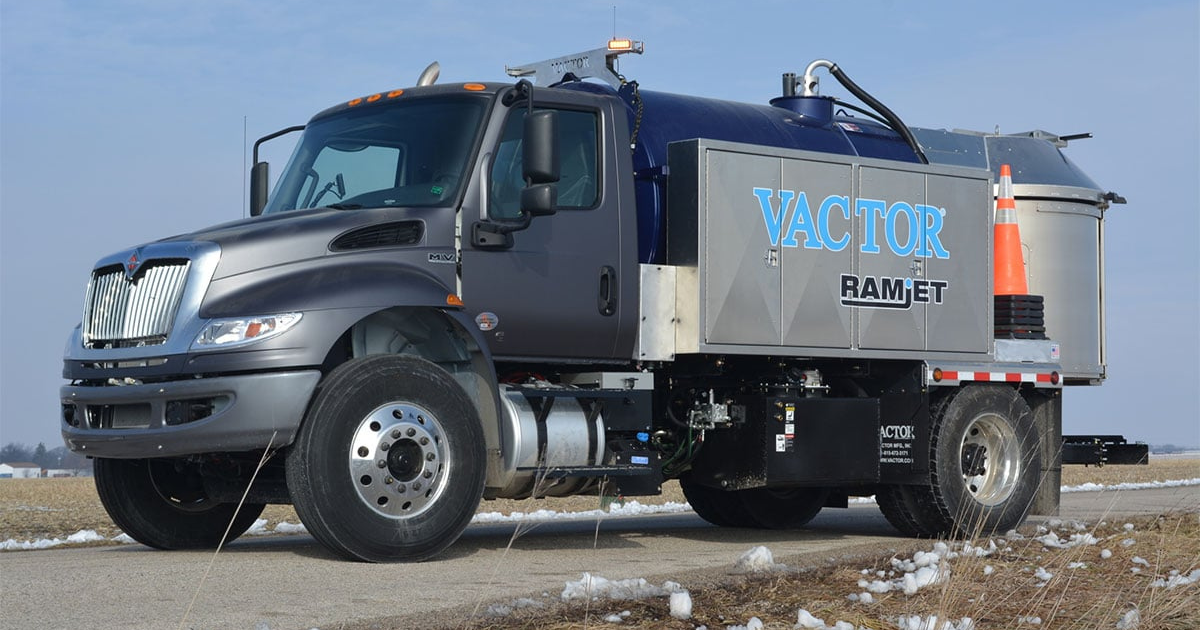
A nozzle is only as good as the jetter behind it. Before you buy, check three things. First, your jetter’s flow and pressure, so the nozzle operates in its designed range. Second, the nozzle thread size, so it actually fits your hose end. Third, the pipe diameter range, so the jets reach and clean the full wall. Getting these right is the difference between a nozzle that flies through the line and one that stalls. Haaker can match nozzles to your Vactor Ramjet jetter truck, your trailer jetter, or a combination sewer cleaning truck. For best practices on jetter operation and safety, the National Association of Sewer Service Companies (NASSCO) publishes widely used industry guidance.
Frequently Asked Questions
What is the difference between a penetrating and a flushing nozzle?
A penetrating nozzle puts more energy into forward jets to bore through a full blockage and restore flow. A flushing nozzle uses wide rear-angled jets to scour the pipe wall and sweep debris back to the manhole. Crews often open a line with a penetrating nozzle, then clean it with a flushing nozzle.
Which sewer jetting nozzle is best for roots?
Roots need a root-cutting nozzle that uses spinning chains or mechanical cutters powered by the water flow. Standard water jets will not shear a heavy root mass. Confirm the cutter is rated for your pipe material so you clear the roots without damaging the pipe.
What nozzle should I use for grease?
A rotating nozzle is the best choice for grease, soap, and hardened scale. The spinning jets scrub the entire pipe wall and break up coatings that fixed nozzles leave behind. Make sure the nozzle’s flow and pressure match your jetter so it spins correctly.
How do I know what size jetting nozzle I need?
Match the nozzle to your jetter’s rated flow (GPM) and pressure (PSI), confirm the thread size fits your hose, and choose a nozzle suited to your pipe diameter range. A nozzle sized wrong for your machine will underperform. A Haaker rep can match nozzles to your exact jetter.
Can I use the same nozzle for every job?
You can, but you will not get the best results. Different blockages need different nozzles. A small kit with a penetrating, a flushing, and a rotating or cutter nozzle lets your crew handle most lines they will face in a day.
The Bottom Line
The nozzle decides how well your jetter performs. Use a penetrating nozzle to break through a blockage, a flushing nozzle for routine cleaning, a rotating nozzle for grease and scale, and a cutter nozzle for roots. Then match every nozzle to your jetter’s flow and pressure, the thread size, and the pipe diameter. Carry a small range, switch based on the job, and your crew will clear more lines in less time with less water.
Why Order Your Sewer Jetting Nozzles From Haaker Equipment Company
Haaker Equipment Company has supported municipal, industrial, and contractor sewer crews across California, Nevada, and Arizona since 1972, with seven locations and factory-trained service. We carry high-performance sewer jetting nozzles along with the Vactor Ramjet jetter trucks and trailer jetters they run on, plus the parts and support to keep them productive. Nobody works harder for you.
Not sure which nozzle fits your jetter and your lines? Explore our sewer jetter trucks, call 909-598-2706, or contact Haaker Equipment and we will match the right setup to your operation.