Choosing the right size Cimline melter kettle is one of the most consequential decisions a paving or maintenance department makes before crack sealing season starts. Buy too small and crews spend half the day waiting on melted material instead of applying it. Buy too big and the truck sits mostly empty, burning fuel and permit weight on capacity nobody uses. Cimline’s M-Series line spans several tank sizes built for different crew sizes and route lengths, and the right pick comes down to how many linear feet of crack you seal in a season, how far crews travel between fill-ups, and how many people you can put on wands at once. This guide walks through how to size an M-Series melter to your actual workload instead of guessing.
Cimline’s M-Series spans three tank sizes: the M1 (150 gallons), M2 (230 gallons), and M4 (410 gallons), each rated for a different daily production range. The right size depends on lane miles sealed per day, crew count on wands, and refill distance, not just total annual mileage.
How Cimline M-Series Capacity Is Measured
Melter capacity gets talked about in gallons, but two melters with the same rated tank size can behave very differently on the road depending on how that capacity is delivered and heated.
Kettle Gallons vs Usable Melt Volume
A tank’s rated capacity is not the same as what you can pour into a crack on a given morning. Cimline’s current M-Series lineup is rated at 150 gallons on the M1, 230 gallons on the M2, and 410 gallons on the M4, but manufacturers rate kettles at a full-load figure, and most crews run a working reserve so the unit never runs dry mid-route. When you compare M-Series models, ask for the usable pour volume at operating temperature, not just the tank’s nameplate rating. (Per Cimline’s published M-Series specifications as of this writing; Cimline notes specs are subject to change without notice, so confirm current figures before quoting a customer.)
Heat-Transfer Oil vs Direct-Fire Designs
Cimline’s M-Series uses indirect, oil-jacketed heating rather than direct flame contact with the sealant. That protects the material from scorching and keeps the batch consistent, but it also means heat-up time is a function of oil volume and burner output, not just tank size. Cimline rates the M1 at 250,000 BTUs and both the M2 and M4 at 290,000 BTUs, so the larger M4 tank relies on the same burner output as the mid-size M2. A larger tank with an undersized burner will actually melt slower per gallon than a smaller tank matched to a properly sized burner, which is why burner output should be part of the sizing conversation, not an afterthought. Because melter kettles run at high temperatures, crews should also follow OSHA guidance on hot work safety when loading, heating, and pouring sealant. (Per Cimline’s published M-Series specifications; confirm current BTU ratings with your Haaker representative, since Cimline updates specs without notice.)
Matching Melter Size to Your Daily Workload
The fastest way to size a melter is to work backward from how much crack sealant your crew actually applies in a normal work day, then add a margin for the days that run long.
Small Crews and Spot Repair Routes
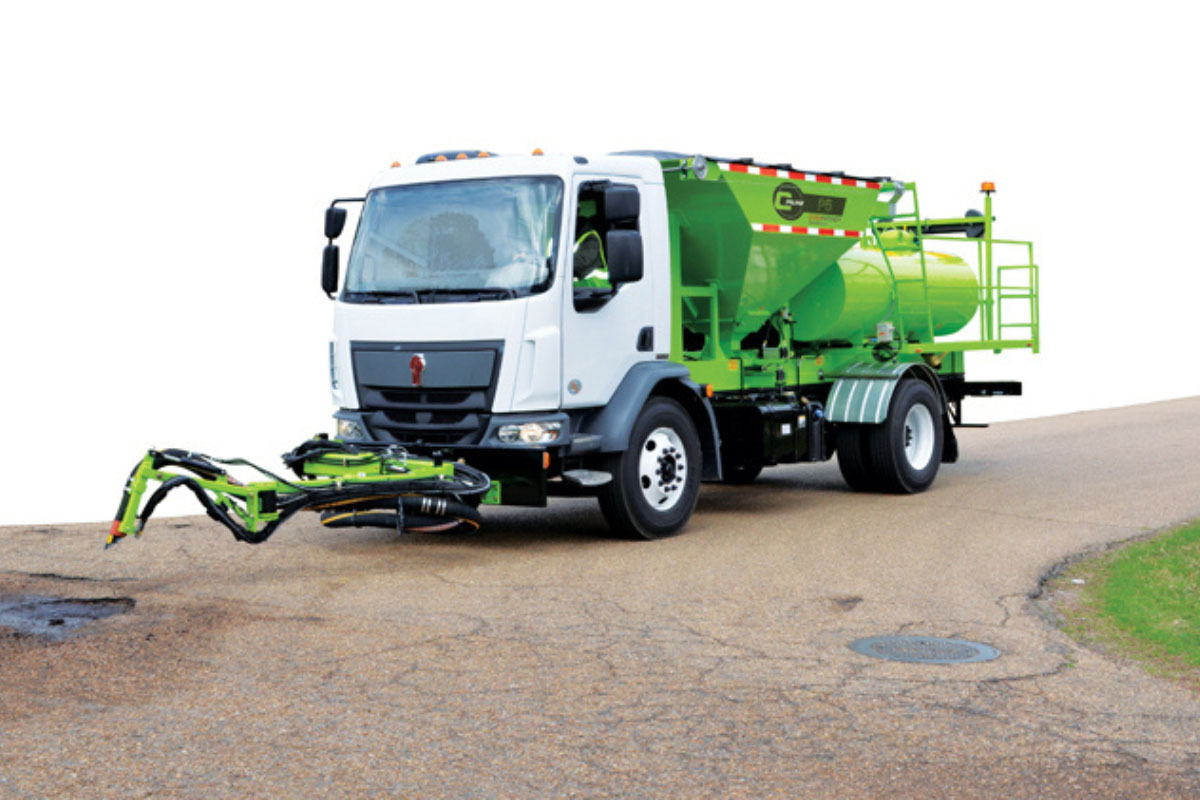
A one or two person crew doing spot repairs, parking lots, and short municipal routes usually doesn’t need a full-size unit. Cimline positions the 150-gallon M1 for exactly this profile: work consisting mainly of parking lots with some road or municipal work, sealing under roughly 6,000 to 7,000 linear feet a day. At a listed GVWR of 5,515 lbs, the M1 stays light enough to tow with a properly rated three-quarter-ton truck, heats up faster at the start of the day, and is easier for a small crew to manage without a dedicated equipment operator. The tradeoff is more frequent refills on longer jobs, which is fine if your routes are short and close to the yard. For agencies planning pavement preservation budgets, the Federal Highway Administration’s pavement preservation resources outline how crack sealing fits into a broader maintenance strategy.
Full-Time Crack Sealing Crews
Once you’re running a crew that seals cracks as its primary job for weeks at a time, a mid-size or larger M-Series melter earns its keep by cutting the number of refill trips per week. Cimline positions the 230-gallon M2 for crews averaging 5 to 7 lane miles of daily production, with dual loading doors that speed up refills between routes. Crews sealing highway shoulders, large parking facilities, or airport pavement typically want enough kettle capacity to run a full shift without returning to a batch plant or supply yard, especially when the nearest sealant supplier is an hour or more away.
Municipal and County-Wide Programs
Public works departments running a seasonal crack sealing program across dozens of lane miles usually get the most value from the larger M-Series tanks paired with a truck-mounted chassis rather than a trailer. Cimline’s 410-gallon M4 is built for this tier, rated for 8 or more lane miles of daily production and available with a dual-hose configuration that lets two operators pour at once. At a listed GVWR of 9,520 lbs, the M4 is typically specified as a truck-mount rather than a towable trailer, which also means confirming your chassis and driver’s license class can legally carry that combined weight before you order one.
Other Factors That Affect the Right Size
Kettle capacity is the headline number, but a few other variables change which size actually makes sense for your operation.
Route Density and Refill Distance
Two crews sealing the same linear footage per day can need different melter sizes if one crew works a tight municipal grid five minutes from the yard and the other works scattered rural routes an hour apart. The farther and less predictable your refill trips, the more it pays to size up so a bad traffic day doesn’t strand a crew with an empty kettle.
Agitator and Wand Count
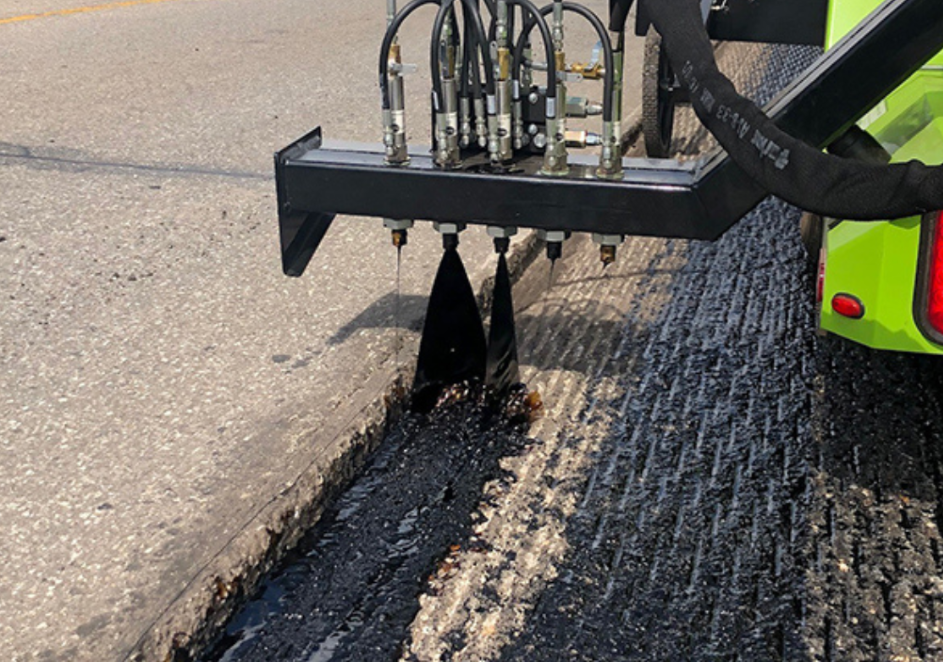
Larger M-Series units generally support more simultaneous wand stations, which matters if you’re running a two or three person application crew rather than one operator. Cimline’s M1 and M2 ship as single-wand systems, while the M4 is available in a dual-hose configuration built for two operators pouring at once. Sizing a kettle without accounting for wand count is a common mistake: a tank sized right for one wand can run short when a second operator is pulling material at the same time. (Per Cimline’s published M-Series configuration options; confirm current wand and hose configurations with your Haaker representative.)
Trailer vs Truck-Mounted Chassis
Larger kettle sizes generally shift toward truck-mounted configurations because the loaded weight exceeds what’s practical or legal to tow behind a standard pickup. Cimline’s listed GVWR runs from 5,515 lbs on the M1 up to 9,520 lbs on the M4, with the M4’s GAWR rated at 10,000 lbs, weight classes that push toward a dedicated truck chassis rather than a towable trailer. If your crew already runs a dedicated truck chassis, a bigger tank is easy to justify. If you’re trying to keep the unit towable behind an existing fleet truck, the M1 or M2’s lighter GVWR often sets the ceiling on tank size before workload does. (GVWR and GAWR figures are per Cimline’s published M-Series specifications; confirm current ratings and your state’s towing and licensing requirements before ordering, since manufacturer specs change without notice.)

| Model | Capacity | Daily Production | GVWR | Chassis |
|---|---|---|---|---|
| M1 | 150 gallons | Up to ~6,000-7,000 linear ft/day (3-4 lane miles) | 5,515 lbs | Trailer |
| M2 | 230 gallons | 5-7 lane miles/day | 6,700 lbs | Trailer |
| M4 | 410 gallons | 8+ lane miles/day, dual-hose option | 9,520 lbs | Truck-mount |
Figures are per Cimline’s published M-Series specifications as of this writing. Cimline notes specs are subject to change without notice, so confirm current numbers with your Haaker representative before ordering.
If You’re Still Deciding, Use This Checklist
- If you seal cracks part-time between other duties, choose a smaller trailer-mounted M-Series kettle.
- If you run a dedicated two or three person crew for most of the season, choose a mid-size kettle sized to your wand count.
- If your crew covers scattered routes far from the yard, size up regardless of crew count so a long drive doesn’t strand the operator.
- If you’re sealing highway shoulders or airport pavement under a municipal contract, choose a truck-mounted, high-capacity M-Series unit.
- If your fleet trucks can’t legally tow a heavier loaded trailer, let that weight limit set your ceiling before workload does.
Frequently Asked Questions
How many gallons does a Cimline M-Series melter hold?
Cimline’s current M-Series lineup offers three tank sizes: the M1 at 150 gallons, the M2 at 230 gallons, and the M4 at 410 gallons. Each is rated for a different daily production range, from roughly 3-4 lane miles on the M1 up to 8 or more lane miles on the M4. Confirm current figures with Haaker, since Cimline updates specs periodically.
How long does it take a Cimline melter to reach pouring temperature?
Heat-up time depends on ambient temperature, oil volume, and burner output rather than tank size alone. A well-matched burner and kettle combination generally reaches pouring temperature within a defined window each morning, but always follow Cimline’s documented startup procedure and verify current heat-up times for your specific model.
Can one melter support a two or three person sealing crew?
Yes, but only on models built for it. Cimline’s M1 and M2 ship as single-wand systems, while the 410-gallon M4 offers a dual-hose configuration built for two operators pouring at once. Matching wand count to kettle tier avoids running short when a second operator is on the job.
What’s the difference between an M-Series melter and a direct-fire kettle?
The M-Series uses indirect, oil-jacketed heating that protects the sealant from scorching, while older direct-fire designs apply flame closer to the material and can degrade it if not carefully managed. Indirect heating generally gives more consistent batch quality across a full day of pouring.
How often should the melter be serviced during sealing season?
Daily checks on oil level, burner function, and agitator operation are standard practice during active sealing weeks, with more thorough service at manufacturer-recommended intervals. Follow Cimline’s maintenance schedule for your specific model and confirm current service intervals with Haaker’s parts and service team.
The Bottom Line
Sizing a Cimline M-Series melter comes down to three numbers: how much crack sealant your crew pours on a typical day, how many people work wands at once, and how far you drive between refills. Get those three right and the rest of the decision, trailer versus truck-mount, burner output, agitator configuration, mostly falls into place. Undersizing costs you idle crew time waiting on melt; oversizing costs you fuel, towing capacity, and money tied up in capacity you rarely use.
Why Trust Haaker Equipment Company for Cimline Melter Sizing
Haaker Equipment Company is the authorized Cimline and Falcon dealer across California, Arizona, and Nevada, with factory-trained technicians and a full parts inventory backing every asphalt maintenance unit we sell. Our team walks through your actual route data, crew size, and refill logistics before recommending a kettle size, so you’re not guessing at capacity from a spec sheet alone.
Explore the full Cimline asphalt repair lineup or the Falcon asphalt equipment line, request a demo or quote, or contact us to talk through sizing with a specialist. Find your nearest branch below.
Call or Visit the Branch Nearest You
Haaker Equipment Company serves California, Arizona, and Nevada. Tap a number to call, or choose “View map” for the address and directions.