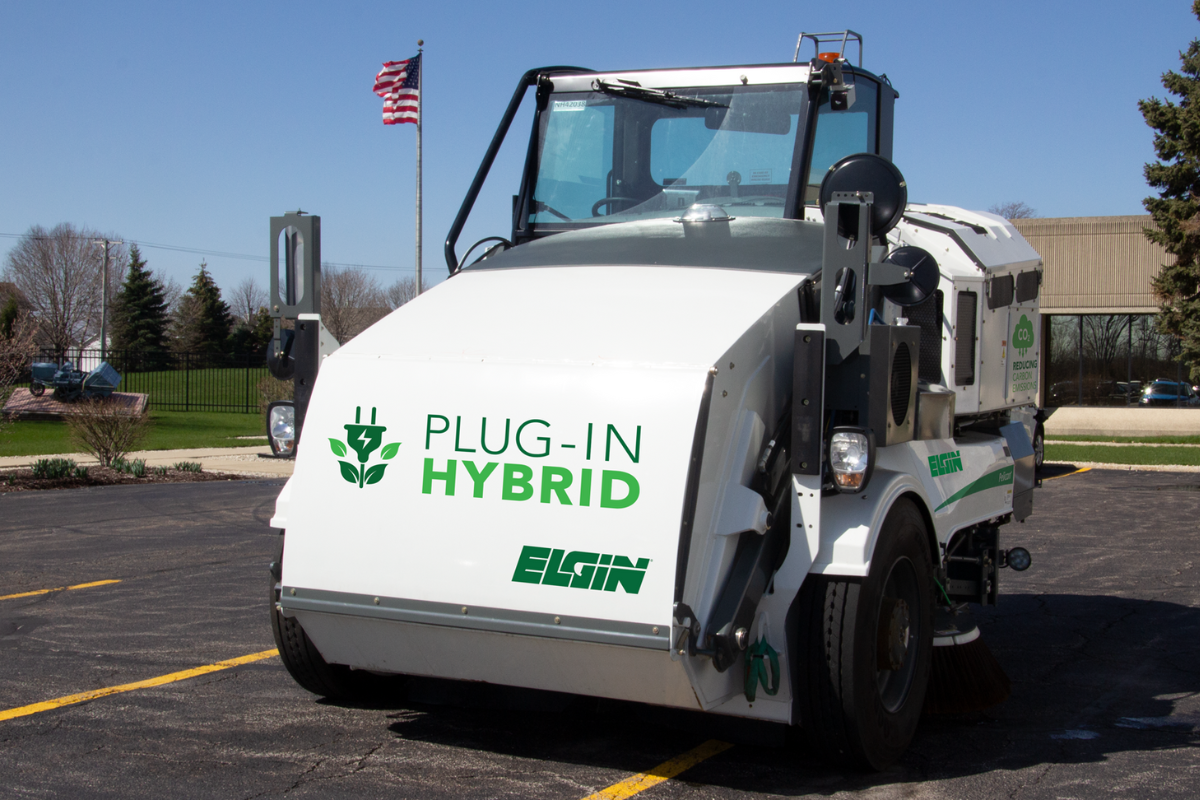
Choosing between a single-engine and a dual-engine street sweeper changes how much you spend on fuel, how often the machine sits in the shop, and how many hours your operators can log in a shift. A single-engine street sweeper draws power for the broom, blower, and water pump from the chassis engine through a hydraulic system. A dual-engine sweeper keeps the chassis engine dedicated to driving and runs a second, smaller auxiliary engine just for the sweeping components. Elgin builds both configurations, and the right one depends on your route length, how much idle time your crew logs, and how much maintenance capacity your shop has. This guide walks through fuel consumption, maintenance load, and total cost of ownership so you can match the design to your actual duty cycle instead of guessing.
A single-engine street sweeper uses the chassis engine to power both driving and sweeping, which lowers upfront cost and simplifies maintenance to one engine. A dual-engine sweeper runs a separate auxiliary engine for the sweeping system, reducing chassis engine wear and idle-related fuel burn, but it adds a second engine to service and track.
How Single-Engine and Dual-Engine Sweepers Work
The engine configuration determines how the sweeper gets power to its broom, blower, and water spray system. Both designs move the machine down the road the same way. The difference is where the sweeping power comes from.
Single-Engine (Chassis-Powered) Design
A single-engine sweeper runs everything off the truck’s main diesel or gas engine. A hydraulic pump or power take-off draws power from the chassis engine to spin the broom, run the blower, and pressurize the water system. This keeps the machine simpler, with one engine to fuel, service, and monitor. The tradeoff is that the chassis engine works harder at low road speeds, which is exactly when a sweeper spends most of its time.
Dual-Engine (Auxiliary) Design
A dual-engine sweeper adds a second, smaller engine mounted on the chassis that powers only the sweeping components. The main engine handles driving and nothing else. This setup lets the auxiliary engine run at a steady, efficient speed regardless of how fast or slow the truck is moving, and it takes wear off the chassis engine. The tradeoff is a second engine with its own fuel system, filters, and service intervals.
Fuel Consumption Compared
Fuel is usually the first place operators look when comparing the two designs, and the answer depends heavily on route type.
Idle Time and Auxiliary Engine Efficiency
Single-engine sweepers burn more fuel at low speeds because a large diesel engine idling or crawling at 3 to 5 mph is not operating anywhere near peak efficiency. A dual-engine sweeper’s auxiliary engine is sized for the sweeping load, not for hauling a loaded chassis, so it tends to run leaner during long, slow sweeping passes. On stop-and-go routes with a lot of idle time, this gap widens.
Route Type Matters
On highway or arterial routes where the sweeper travels at higher speeds between short sweeping bursts, the fuel gap between single and dual engine designs narrows. The auxiliary engine’s advantage shows up most on slow, dense residential routes and parking lot work where the sweeper idles or crawls for hours at a stretch. Fuel burn in gallons per hour varies by engine displacement and duty cycle, so ask your Haaker Equipment Company representative for route-specific estimates on the model you are considering.
| Factor | Single-Engine | Dual-Engine |
|---|---|---|
| Fuel use on slow residential routes | Higher, chassis engine works inefficiently at low speed | Lower, auxiliary engine sized for sweeping load |
| Fuel use on higher-speed arterial routes | Comparable | Comparable |
| Upfront purchase cost | Lower | Higher |
| Engines to maintain | One | Two |
| Chassis engine wear | Higher, carries both driving and sweeping load | Lower, dedicated to driving only |
| Mechanical complexity | Lower | Higher |
Maintenance Load and Downtime
Every engine you add to a machine is another set of filters, fluids, and failure points. The maintenance comparison is not really about which design breaks down more often. It is about how many systems your shop has to track and staff for.
Single Engine: One Service Schedule
With one engine, your shop tracks one oil change interval, one set of filters, and one set of belts and hoses tied to the hydraulic or PTO system that drives the sweeping components. That simplicity is real, and it matters most for smaller fleets or shops without a dedicated heavy equipment technician on staff.
Dual Engine: Two Engines, Two Schedules
A dual-engine sweeper effectively doubles the engine-related maintenance line items. Your shop now tracks service intervals for the chassis engine and for the auxiliary engine separately, and they can run on different schedules depending on hours logged. In exchange, the chassis engine sees less wear over its life because it is not carrying the sweeping load, which can extend the interval between major chassis engine overhauls. Service intervals for the auxiliary engine and chassis engine overhaul intervals both vary by model and duty cycle, so check with your Haaker Equipment Company technician for the specifics on your unit.
Total Cost of Ownership
Purchase price is only part of the picture. Fuel, maintenance labor, parts, and downtime all factor into what a sweeper actually costs over five or ten years of service. Here is a simple way to sort your decision:
- If your routes are mostly slow residential streets or parking lots with heavy idle time, choose a dual-engine sweeper. The fuel savings compound over thousands of hours.
- If your budget is tight and your shop has limited technician capacity, choose a single-engine sweeper. One engine is simpler to keep running.
- If you run mixed routes with a lot of highway travel between jobs, either design works well, so let purchase price and shop capacity decide.
- If you already run a mixed fleet of both designs, standardize on whichever one your technicians know best to cut training time and parts inventory.
- If extending chassis engine life is a priority because you plan to keep the truck a long time, choose a dual-engine sweeper.
Matching the Sweeper to Your Routes
The best way to decide is to look at your actual route data. Pull a week of GPS or route logs and check how much time your sweepers spend under 10 mph versus how much time they spend transiting between jobs. Crews running dense municipal routes with a lot of curb miles per hour tend to see the biggest return from dual-engine designs. Crews covering large parking lots or industrial sites with long transit stretches between jobs often do fine with a single-engine machine.
Shops that maintain their own fleet should also weigh technician bandwidth. A single-engine sweeper is easier to fold into a shop that already services chassis engines for other trucks, since there is only one engine type to learn. A dual-engine sweeper asks more of your parts inventory and your technicians’ training, but it pays that back in reduced chassis wear and, on the right routes, lower fuel spend.

Emissions rules also factor into this decision in California, Arizona, and Nevada. Nonroad diesel engines, including auxiliary sweeper engines, fall under EPA nonroad diesel engine emissions standards, and California operators should also check current CARB fleet rules for any fleet-specific requirements that apply to sweeper engines in your service area. Emissions tier requirements vary by engine and model year, so confirm which tier applies to your unit with your Haaker Equipment Company representative before you finalize a spec.
Frequently Asked Questions
Is a dual-engine street sweeper always more fuel efficient than a single-engine model?
Not always. Dual-engine sweepers tend to save fuel on slow, stop-and-go routes with heavy idle time. On higher-speed routes with less idling, the fuel difference between the two designs narrows and may not fully justify the added purchase cost and mechanical complexity.
Which design costs less to maintain over time?
Single-engine sweepers have lower maintenance complexity since there is only one engine to service and stock parts for. Dual-engine sweepers add a second service schedule but can reduce wear on the chassis engine, which may lower major overhaul costs later in the truck’s life.
Can a single-engine sweeper be upgraded to dual-engine later?
Generally no. The engine configuration is built into the chassis and sweeping system design from the factory. Switching designs after purchase is not a practical retrofit, so this decision needs to be made before you order the machine.
Do dual-engine sweepers need a different type of technician?
Not a different type, just more training time. A technician who already services diesel engines can work on either design. The real difference is that dual-engine machines require tracking two separate service schedules instead of just one.
Which design is better for a small municipal fleet with one mechanic?
Smaller fleets with limited technician bandwidth often do better with single-engine sweepers, since there is only one engine and one set of maintenance procedures to learn and stock parts for on a tight budget.
The Bottom Line
Single-engine sweepers cost less upfront and are simpler to maintain, which fits smaller fleets and shops with limited technician capacity. Dual-engine sweepers cost more and add a second service schedule, but they cut chassis engine wear and often save fuel on slow, idle-heavy routes. Pull your actual route data before you decide. The routes you run, not the spec sheet, should drive the choice.
Why Choose Elgin Street Sweepers From Haaker Equipment Company
Haaker Equipment Company is the authorized Elgin street sweeper dealer across California, Arizona, and Nevada, with factory-trained technicians, a full parts inventory, and service locations throughout the region. Whether your fleet needs a single-engine sweeper for straightforward maintenance or a dual-engine model to cut fuel costs on slow routes, our team can help you spec the right machine for your routes and your shop.
Browse our Elgin broom sweepers and Elgin air sweepers, including the Elgin Pelican and Elgin Crosswind, or explore our full product lineup. Ready to see a sweeper in action? Schedule a demo or request a quote, or contact us to talk with a specialist.
Call the branch nearest you: Los Angeles 909-598-2706, San Diego 619-569-1946, Colton 909-370-2100, Central Valley 559-220-8897, Northern California 510-514-0043, Nevada 702-639-0156, or Phoenix 602-266-8214.