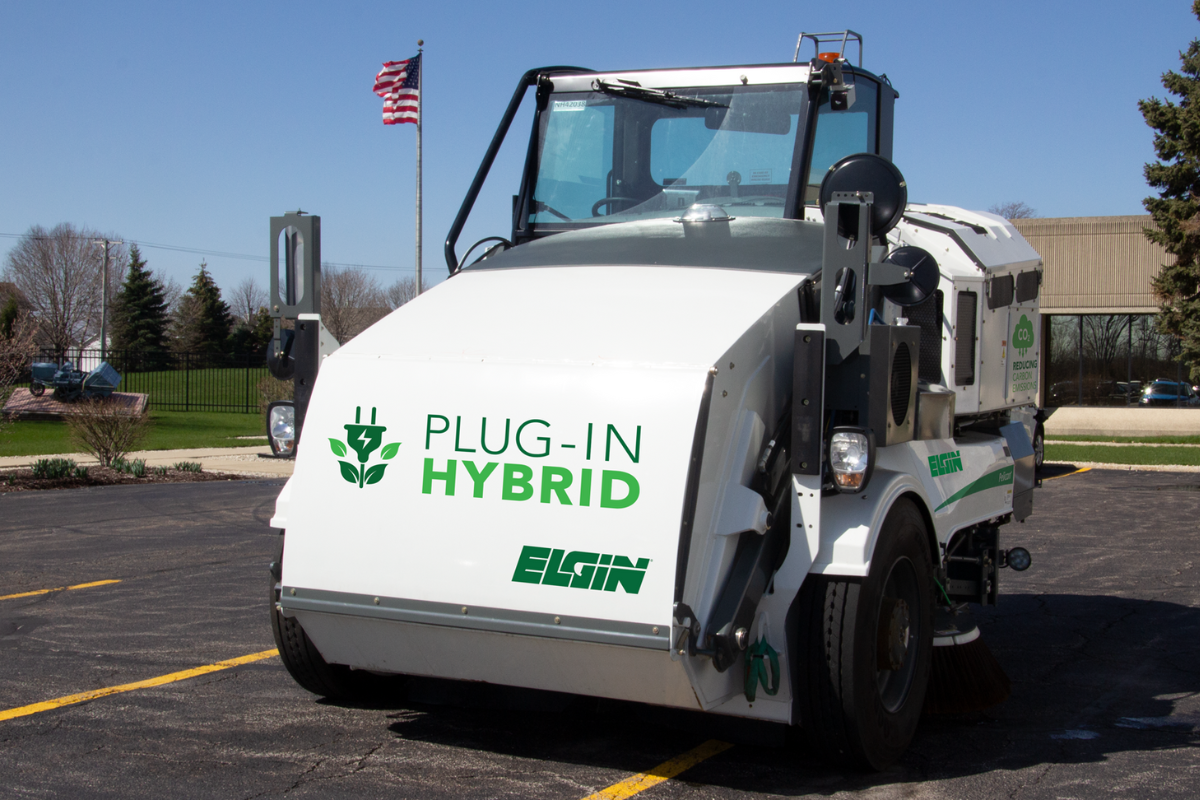
Electric street sweeper cost is the first question every fleet manager asks when electrification comes up, and the sticker price is only part of the answer. A battery-electric sweeper costs more up front than its diesel twin, but it flips the math on fuel, maintenance, and, in California and other clean air regions, grant funding that can close much of the purchase gap. The real analysis covers four things: purchase price, charging infrastructure, duty cycle fit, and incentives. This guide walks through each one in plain terms so you can decide whether an electric or hybrid electric sweeper, like the electric versions of the Elgin Pelican and Broom Bear, makes sense for your routes, your yard, and your budget over the life of the machine.
An electric street sweeper costs more to buy than a diesel model, but grant programs can offset a large share of the difference. Owners then save on fuel and maintenance every year, since electricity costs less than diesel and electric drivetrains eliminate many engine service items. Duty cycle and charging planning decide the fit.
What Drives Electric Street Sweeper Cost
Purchase Price
Battery packs are the main reason an electric sweeper carries a higher list price than a comparable diesel unit. The premium varies by model and battery size, so treat any number you have heard as a starting point and get a current quote for the configuration you actually need. Remember that a sweeper is a working machine, not a commuter car. The chassis, hopper, brooms, and conveyor are the same proven hardware. What changes is the powertrain and the energy storage that feeds it.
Charging Infrastructure
Budget for the charger and the electrical work behind it, not just the plug. Many yards need panel upgrades or a new service drop to support fleet charging, and utility lead times for that work can run months. Involve your utility early. Many utilities in California, Arizona, and Nevada offer make-ready programs that pay for some or all of the infrastructure on their side of the meter.
Batteries and Duty Cycle
Battery capacity determines how many hours the sweeper works between charges. Sweeping is a steady, moderate load with lots of low-speed operation, which suits electric drive well. Sizing still matters: a long arterial route in summer heat with the hydraulics working hard draws more energy than a short downtown loop.
Charging: What to Plan For
Overnight Charging Fits Sweeper Schedules
Street sweepers are a natural fit for depot charging. Most sweep a defined route and return to the same yard every day, and many operations sweep in the early morning or at night, leaving a predictable charging window. Overnight AC charging on a lower-power charger is cheaper to install and easier on the batteries than fast charging, and off-peak electricity rates cut the cost per shift further.
Where the Sweeper Parks Matters
Walk your yard before you order the truck. You need charger placement that matches where the sweeper actually parks, conduit runs to that spot, and room for a second charger later, because fleets rarely stop at one electric vehicle. If your sweepers stage at a satellite yard part of the year, plan charging there too.
Duty Cycle: Will It Finish Your Route?
This is the question that decides whether electric works for you today. Add up your longest sweeping day: route miles, deadhead miles to and from the route, hours of broom and conveyor operation, and season. Then compare that against the runtime of the specific model and battery package you are quoting, with a comfortable margin. Many municipal routes fit within a single charge. Long county routes or double-shift operations may point to a hybrid electric configuration instead, which pairs battery sweeping with an onboard engine so the machine is never stranded. A demo on your actual route is worth more than any spec sheet, and it is exactly what we recommend before any electric purchase.
Electric vs Diesel: Where the Money Goes
| Cost Category | Diesel Sweeper | Electric Sweeper |
|---|---|---|
| Purchase price | Lower list price | Higher list price, grant eligible |
| Energy per shift | Diesel fuel, price volatile | Electricity, cheaper and stable off-peak |
| Routine maintenance | Oil, filters, DPF, emissions systems | No oil changes or DPF on electric drive |
| Downtime drivers | Engine and emissions repairs | Fewer wear items on the powertrain |
| Noise | Engine noise limits night work | Quiet, friendlier for night routes |
| Emissions rules | Faces tightening fleet rules | Zero tailpipe emissions |
| Infrastructure | Existing fuel island | Charger and electrical work required |
Two cost lines deserve extra attention. Fuel is the big annual number, and sweepers burn a lot of it because they run long hours at working load. Maintenance is the quieter saving: an electric drivetrain has no engine oil, no diesel particulate filter regeneration, and fewer moving parts to service, which also means fewer days in the shop.
Grants and Incentives That Cut the Price
Federal Programs
The EPA has funded clean heavy-duty vehicle replacements through programs like the Diesel Emissions Reduction Act, and new funding rounds appear regularly. Check current opportunities on the EPA DERA program page.
California Programs
California fleets have the deepest incentive options, including voucher and grant programs administered through the California Air Resources Board and local air districts. See the CARB site for current heavy-duty zero-emission programs.
Local Air Districts
Districts such as the South Coast AQMD run their own clean fleet funding cycles, and utility make-ready money can cover charging infrastructure. Stacking a purchase incentive with an infrastructure program is often what makes the total project pencil out. Our team tracks these programs across California, Arizona, and Nevada and can point you to what is open when you are ready to buy.

Which Option Fits Your Fleet?
- If your routes return to one yard daily and fit within a single charge, choose a battery-electric sweeper and overnight charging.
- If you run long routes or double shifts, choose a hybrid electric configuration so battery limits never park the machine.
- If your agency faces zero-emission fleet mandates or sweeps at night near homes, choose electric sooner rather than later.
- If grant funding is available in your district this cycle, choose to apply now, because programs are often first come, first served.
- If your yard cannot support charging yet, choose a current clean diesel model and start the utility conversation for your next purchase.
Frequently Asked Questions
How much more does an electric street sweeper cost than diesel?
The premium depends on model, battery size, and options, so get a current quote rather than relying on published figures. The more useful number is the net price after grants and vouchers, which in strong incentive regions like Southern California can close much of the gap (verify current program amounts).
How long does an electric sweeper run on a charge?
Runtime depends on battery capacity, route profile, temperature, and how hard the sweep system works. Many municipal routes fit a full shift on one charge. The right approach is to map your longest day and demo the machine on your own route before you commit to a configuration.
What charging setup does a street sweeper need?
Most fleets use depot charging at the yard where the sweeper parks, sized so the machine recovers fully during its off hours. Plan the electrical work early, involve your utility, and ask about make-ready programs that fund panel upgrades, conduit, and chargers.
Are electric sweepers cheaper to maintain?
The electric drivetrain removes oil changes, fuel filters, and diesel exhaust aftertreatment service, and regenerative braking reduces brake wear. Sweep components like brooms, conveyors, and hydraulics still need the same attention as any sweeper. Net maintenance spend and shop time both typically drop versus a diesel unit.
Do grants really cover electric sweepers?
Yes. Federal, state, and air district programs have all funded zero-emission sweeper purchases, and utility programs often fund charging infrastructure separately. Funding cycles open and close, so timing matters. Haaker Equipment Company tracks active programs across California, Arizona, and Nevada and can help you line up an application.
The Bottom Line
Electric street sweeper cost only makes sense as a total picture: higher purchase price, minus grants, minus years of fuel and maintenance savings, plus charging infrastructure. For fleets with predictable routes, a home yard, and access to clean air funding, the total cost story is already competitive, and the quiet operation and zero tailpipe emissions are bonuses your residents will notice. For fleets with long routes or no charging plan yet, hybrid electric models and a staged infrastructure plan keep the path open. Run the numbers on your own duty cycle, and let a demo on your streets settle the runtime question.
Why Buy an Electric Street Sweeper From Haaker Equipment Company
Haaker Equipment Company is the authorized Elgin street sweeper dealer for California, Arizona, and Nevada, with factory-trained technicians, a full parts inventory, and service locations across the region. We can walk you through electric and hybrid electric options across the Elgin broom sweeper line, including the Elgin Pelican, as well as Elgin air sweepers like the Crosswind, and help you match grant programs to your purchase. Explore our full product lineup or schedule a demo or request a quote to test an electric sweeper on your own routes.
Call the branch nearest you: Los Angeles 909-598-2706, San Diego 619-569-1946, Colton 909-370-2100, Central Valley 559-220-8897, Northern California 510-514-0043, Nevada 702-639-0156, or Phoenix 602-266-8214. You can also reach us through our contact page and we will connect you with a sweeper specialist.