Every fleet manager knows the feeling. The repair orders are stacking up, the crew is grumbling, and you’re starting to wonder whether you’re maintaining a piece of equipment — or babysitting it.
Sewer cleaning trucks are a significant investment. A well-maintained Vactor sewer cleaning truck can deliver years of productive service. But every machine has a point where the cost of keeping it running exceeds the cost of moving on. The tricky part is knowing when you’ve crossed that line.
Here are five signs your sewer cleaning truck is telling you it’s time.
Sign 1: Downtime Is Becoming the Norm, Not the Exception
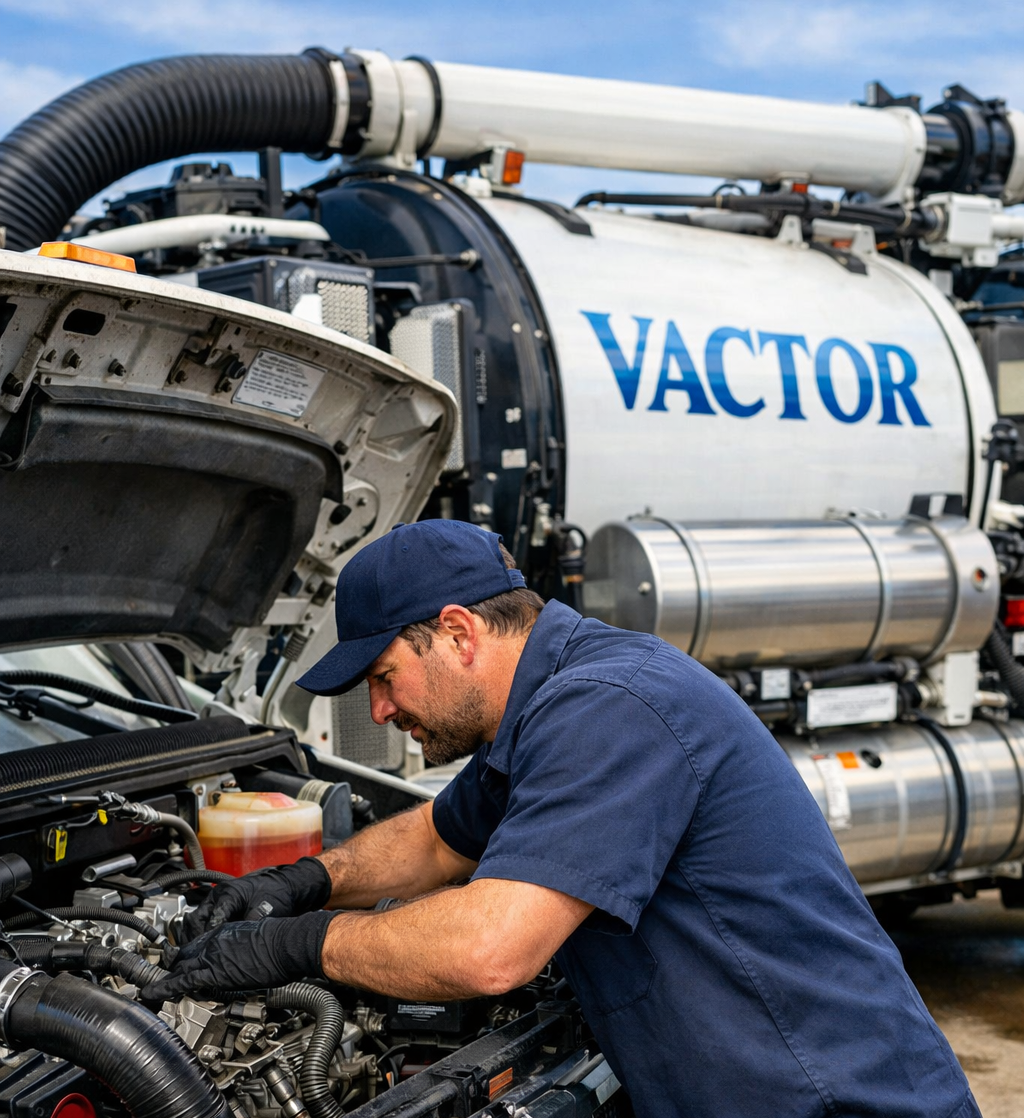
The occasional repair is part of owning heavy equipment. But when your truck is spending more time in the shop than on the job, that’s not a maintenance problem — it’s a productivity problem.
Think about what unplanned downtime actually costs your operation. There’s the direct cost of the repair itself, but there’s also the missed work orders, the overtime to catch up, the crew sitting idle, and the pressure it puts on the rest of your fleet. For municipalities under contract to maintain sewer and stormwater infrastructure on a schedule, downtime has real consequences.
A good benchmark: if your truck is going down more than two or three times per quarter for unplanned repairs, it’s time to do the math on replacement. Reliability is not a luxury — it’s the whole point.
Sign 2: Parts Are Getting Harder (and More Expensive) to Find
Older sewer cleaning equipment eventually reaches the point where the parts supply starts to dry up. Lead times stretch from days to weeks. Prices climb as availability shrinks. And your service team starts spending as much time sourcing components as they do actually turning wrenches.
This is one of the clearest signals that a truck has aged out of its useful service life. When you’re waiting three weeks for a part to keep a 15-year-old machine running, you’re not just paying for the part — you’re paying for three weeks of reduced capacity.
Haaker carries a deep inventory of Vactor parts and supports the full range of models, but even the best-stocked dealer can’t manufacture discontinued components. If parts availability is already becoming a concern, it’s worth getting ahead of it before the next breakdown forces your hand.
Sign 3: Your Crew Is Fighting the Controls on Every Job
Operator experience matters more than most fleet managers realize. An outdated control system doesn’t just slow the job down — it creates fatigue, inconsistency, and real safety risk when crews are running a high-pressure vacuum truck in a live work zone.
Today’s Vactor equipment, including the 2100i and iMPACT series, features IntuiTouch® controls that consolidate all cleaning system functions into a single articulating panel. Setup time is faster. Operator decisions are simpler. The system guides the crew rather than demanding that the crew adapt to the machine.
If your operators are working around the controls on your current truck — using workarounds, relying on tribal knowledge, or making avoidable errors because the system isn’t intuitive — that’s a hidden cost that doesn’t show up on a repair order but absolutely shows up in productivity.
Sign 4: It Can’t Meet Today’s Jobsite and Compliance Requirements
Infrastructure requirements evolve. The jobs your sewer cleaning truck needs to handle today may look different from what it was spec’d for five or ten years ago. Deeper lines, tighter access, more complex catch basin work, enhanced documentation requirements — older equipment wasn’t designed with these in mind.
On the emissions side, fleet managers in California, Nevada, and Arizona are increasingly navigating regulations that older diesel-powered equipment may not meet. Municipalities operating under air quality mandates or pursuing clean fleet grant funding may find that aging equipment is actively limiting their options.
If your current truck is regularly falling short on a job — whether that’s reach, capacity, regulatory compliance, or jobsite documentation — that’s not a usage problem. That’s an equipment problem.
Sign 5: The Math No Longer Works in Your Favor
This is the one that makes the decision official. Fleet professionals often use a simple rule of thumb: when the cost of a single repair approaches or exceeds 50% of the machine’s current market value, replacement becomes the more financially sound choice.
But total cost of ownership is the fuller picture. Add up what you’ve spent on repairs, parts, and unplanned downtime over the last 12 to 24 months. Factor in the crew time diverted to managing the aging unit. Compare that against the financed cost of a new or quality used replacement — and don’t forget to account for the improved productivity, reduced downtime, and longer service interval of a newer machine.
In most cases, fleet managers who run this analysis are surprised by how close the numbers already are — and how fast a new unit pays for itself when downtime disappears.
What to Do Next
If two or more of these signs describe your current situation, it’s worth having an honest conversation about your options — not as a commitment to buy, but as a way to understand what the numbers actually look like.
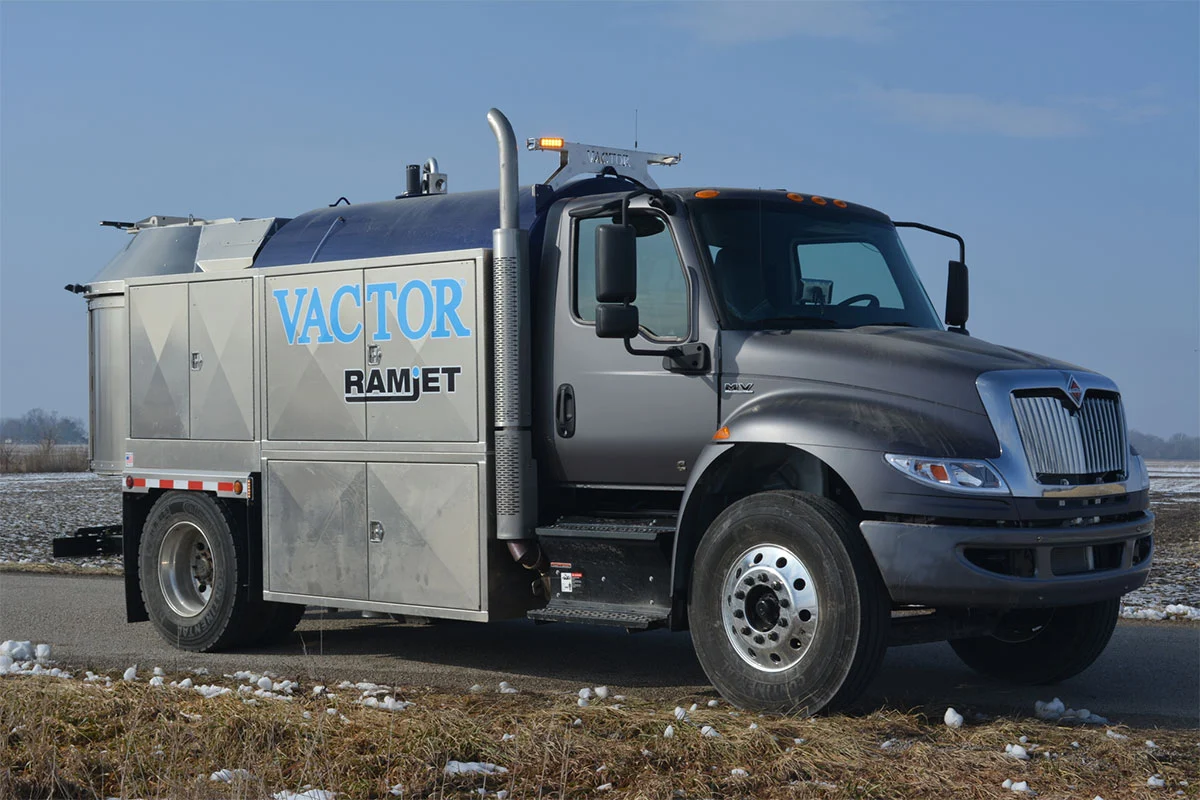
Haaker Equipment has been helping municipalities and contractors make these decisions since 1972. We carry the full Vactor lineup — the 2100i, iMPACT, Ramjet, and more — along with quality used inventory and rental options if you need coverage while you evaluate. Our team will walk through the numbers with you, no pressure.
We’re not here to sell you the most expensive truck. We’re here to make sure your operation doesn’t go down because the wrong one stayed in service too long.
Frequently Asked Questions
How long should a sewer cleaning truck last?
A well-maintained Vactor sewer cleaning truck can deliver 10 to 15 years of productive service, sometimes longer depending on application intensity and maintenance history. High-use municipal fleets typically see major rebuild or replacement decisions around the 8 to 12-year mark.
What is the total cost of ownership for a sewer cleaning truck?
Total cost of ownership includes the purchase price, financing costs, fuel, routine maintenance, unplanned repairs, parts, operator training, and the cost of downtime. For aging equipment, downtime and repair costs often represent the largest and most underestimated portion of TCO. Haaker can help you model the comparison between continuing to maintain your current unit and moving to a replacement.
Should I repair or replace my sewer cleaning truck?
A common rule of thumb: if a single repair costs 50% or more of the machine’s current market value, replacement is likely the better financial decision. More broadly, if you’ve spent more than the machine’s market value in repairs over the last two years, you’re funding a machine that’s already past its economic life.
Can I rent a sewer cleaning truck while I evaluate replacement options?
Yes. Haaker Equipment offers sewer cleaning truck rentals on daily, weekly, and monthly terms. Renting provides immediate operational coverage while you take the time to spec and procure the right replacement unit without pressure.
Haaker Equipment Company has served municipal, industrial, and contractor customers across the Western United States since 1972. Nobody works harder for you.