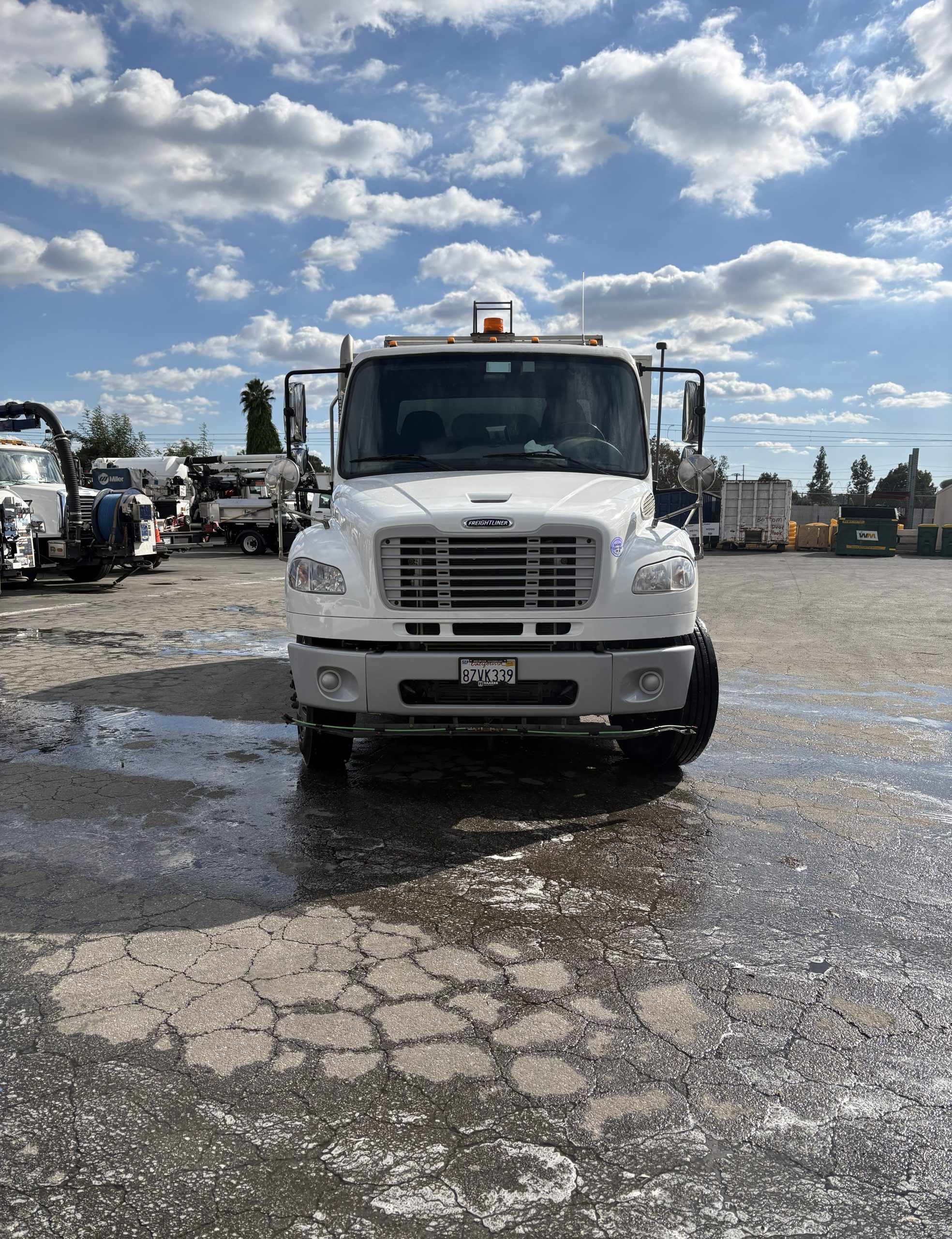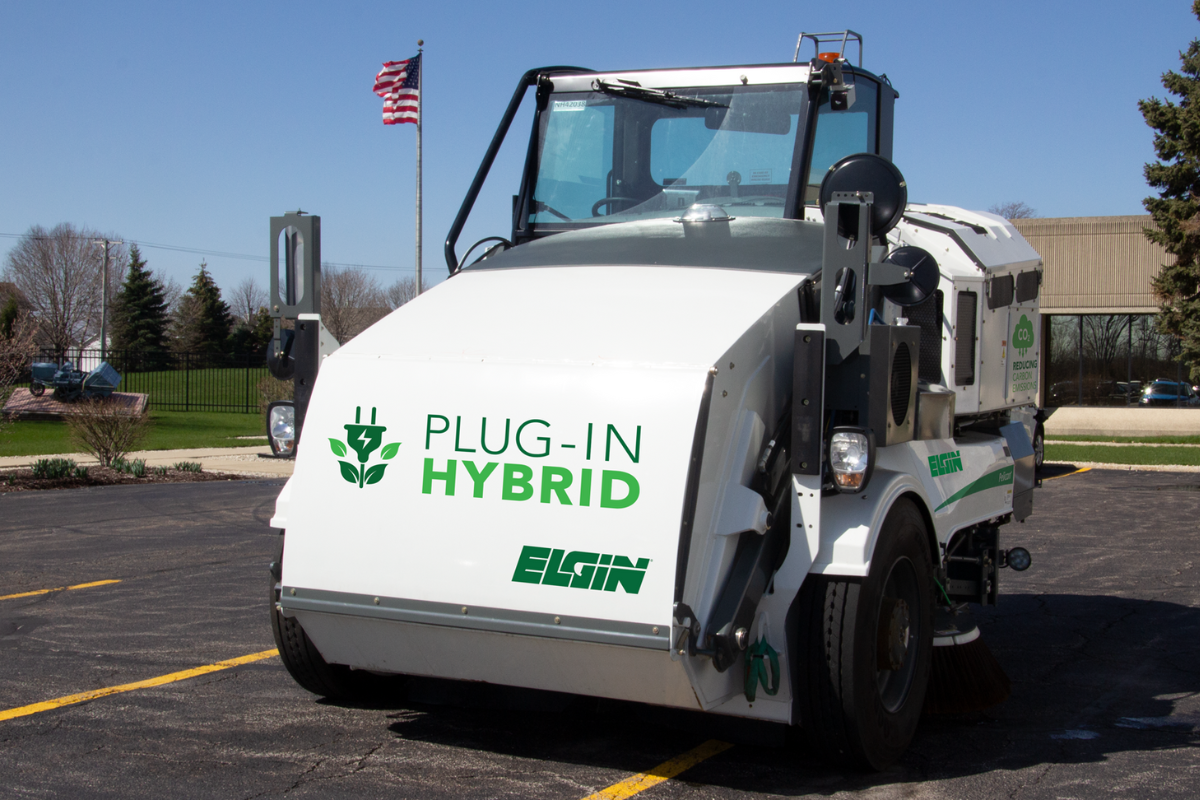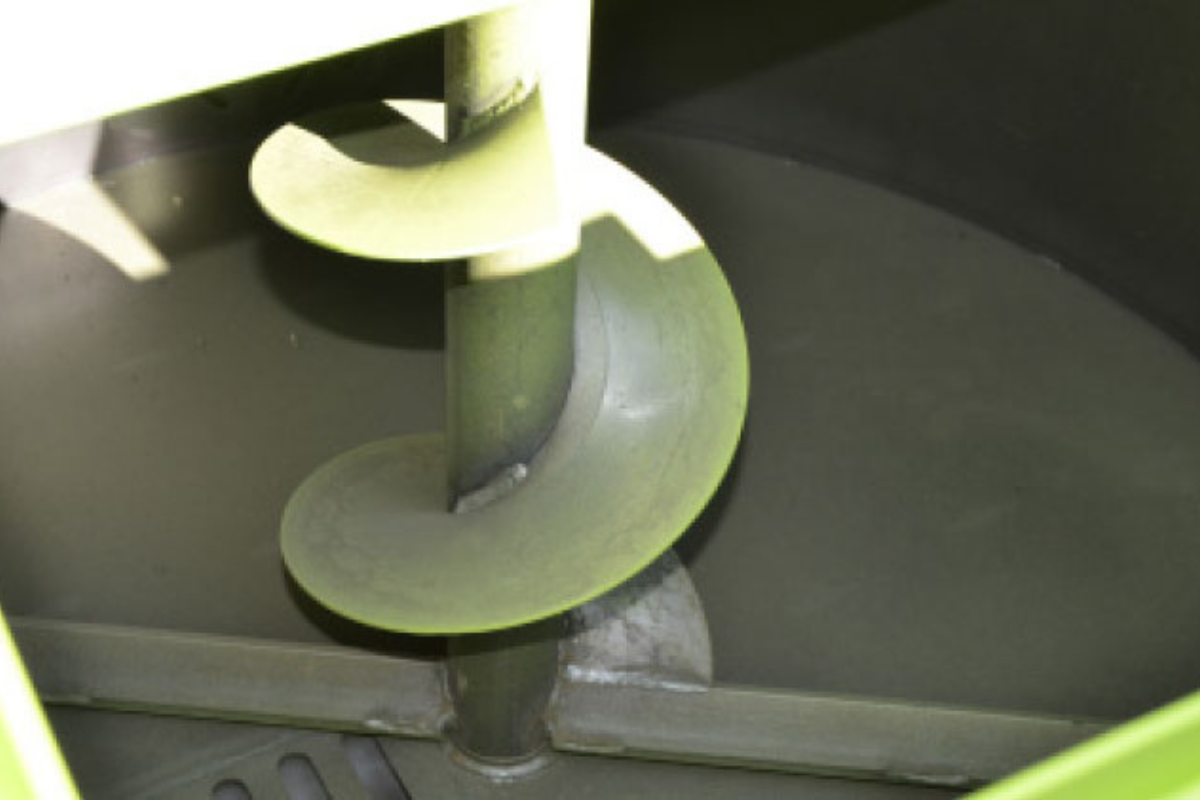
A street sweeper preventive maintenance program is the difference between a sweeper that runs its full route every shift and one that sits in the yard waiting on parts. Sweepers work in dust, water, and grit all day, which wears brooms, seals, and filters faster than most fleet vehicles. When a machine goes down mid route, you lose collected material, miss compliance windows, and pay for emergency repairs that a simple inspection would have caught. This guide lays out a practical PM schedule for broom and air street sweepers, from daily pre trip checks to hour based service intervals, so your crews stay on the street and your capital equipment lasts longer.
Street sweeper preventive maintenance is a scheduled routine of daily, weekly, and hour based inspections that keeps brooms, the dust suppression system, hydraulics, and filters in service. A consistent PM program lowers downtime, cuts repair costs, and extends the life of the sweeper.
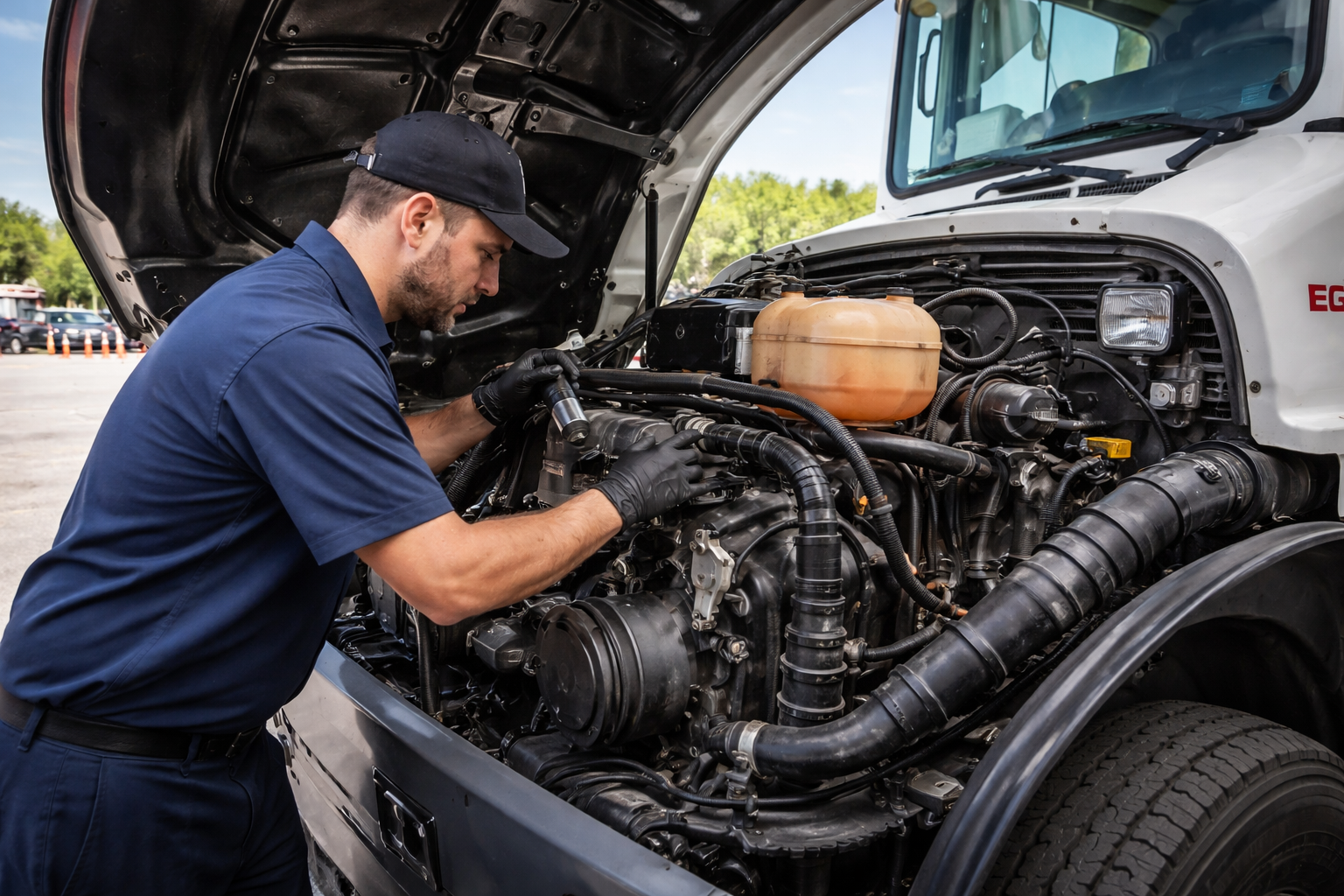
Why preventive maintenance matters for street sweepers
Street sweepers earn their keep by hours on the route, not miles on the odometer. A machine that misses a shift still costs you operator wages, a missed cleaning cycle, and in many cases a stormwater or air quality obligation that does not pause. Preventive maintenance moves repairs from the emergency column, where they are expensive and unplanned, to the scheduled column, where they are cheaper and predictable.
The real cost of downtime
An unplanned failure rarely stays small. A worn main broom that no one caught starts throwing debris, which loads the conveyor and hopper unevenly, which strains the hydraulics. One neglected wear item becomes three repairs. A PM program catches the first item before it cascades, and it gives your parts room time to stock the right filters and brooms before you need them.
Longer service life and better resale
Fleets that document PM get more years out of each sweeper and stronger resale value at trade in. A clean service record tells the next buyer the machine was cared for, and it tells your finance team the asset is worth keeping in rotation.
Daily pre trip and post trip checks
The daily walkaround is the highest value habit in any sweeper PM program because it is fast and it catches the failures that strand a machine. Build it into the operator routine at the start and end of every shift.
Before the shift
- Check engine oil, coolant, and hydraulic fluid levels.
- Fill the water tank and confirm spray nozzles flow evenly with no clogged jets.
- Inspect the main broom and gutter brooms for wear, wrapped wire, and broken segments.
- Look for hydraulic leaks under the machine and at hose fittings.
- Test lights, backup alarm, camera, and beacon before leaving the yard.
- Check tire pressure and look for cuts or uneven wear.
After the shift
- Dump the hopper fully and rinse it to prevent packed debris and corrosion.
- Clean the dust separator or filter screens per the manual.
- Wash down the machine, especially the broom chamber and conveyor.
- Note any new noise, vibration, or performance change in the log.
Weekly and monthly PM tasks
Weekly and monthly service goes deeper than the daily walkaround and targets the wear items that fail on a longer cycle. Assign these to a technician rather than the operator.
Weekly
- Grease all fittings on the broom arms, conveyor, and hopper hinges per the lube chart.
- Inspect conveyor and squeegee elevators for tears, packed material, and tension.
- Check broom pattern and adjust down pressure so the contact strip is even.
- Blow out or wash the dust suppression filters and confirm water pump pressure.
Monthly
- Service the engine air filter and check the fuel and hydraulic filters.
- Inspect belts, the water pump, and the fan or impeller on air sweepers.
- Check hydraulic hoses for abrasion and confirm cylinder function with no drift.
- Torque wheel fasteners and inspect brakes.
Hour based service intervals
Manufacturers set service intervals by engine and auxiliary hours, not calendar dates, because a sweeper working two shifts wears twice as fast as one working part time. Track hours on both the chassis engine and the auxiliary engine where the sweeper uses a separate power unit. The table below is a general framework. (Please verify every interval and capacity against your specific Elgin model manual before you build your PM calendar, since figures vary by model and duty cycle.)
| Interval | Primary tasks | Common wear items |
|---|---|---|
| Daily (per shift) | Fluids, water system, broom check, leaks, lights | Spray nozzles, gutter brooms |
| Weekly | Full grease, conveyor and elevator inspection, broom pattern | Broom segments, squeegees |
| Monthly | Filter service, belt and pump check, brake inspection | Air and hydraulic filters, belts |
| Roughly 250 hours | Engine oil and filter service per manual | Oil filter, fuel filter |
| Roughly 500 to 1,000 hours | Hydraulic service, deeper driveline and pump inspection | Hydraulic fluid, main broom |
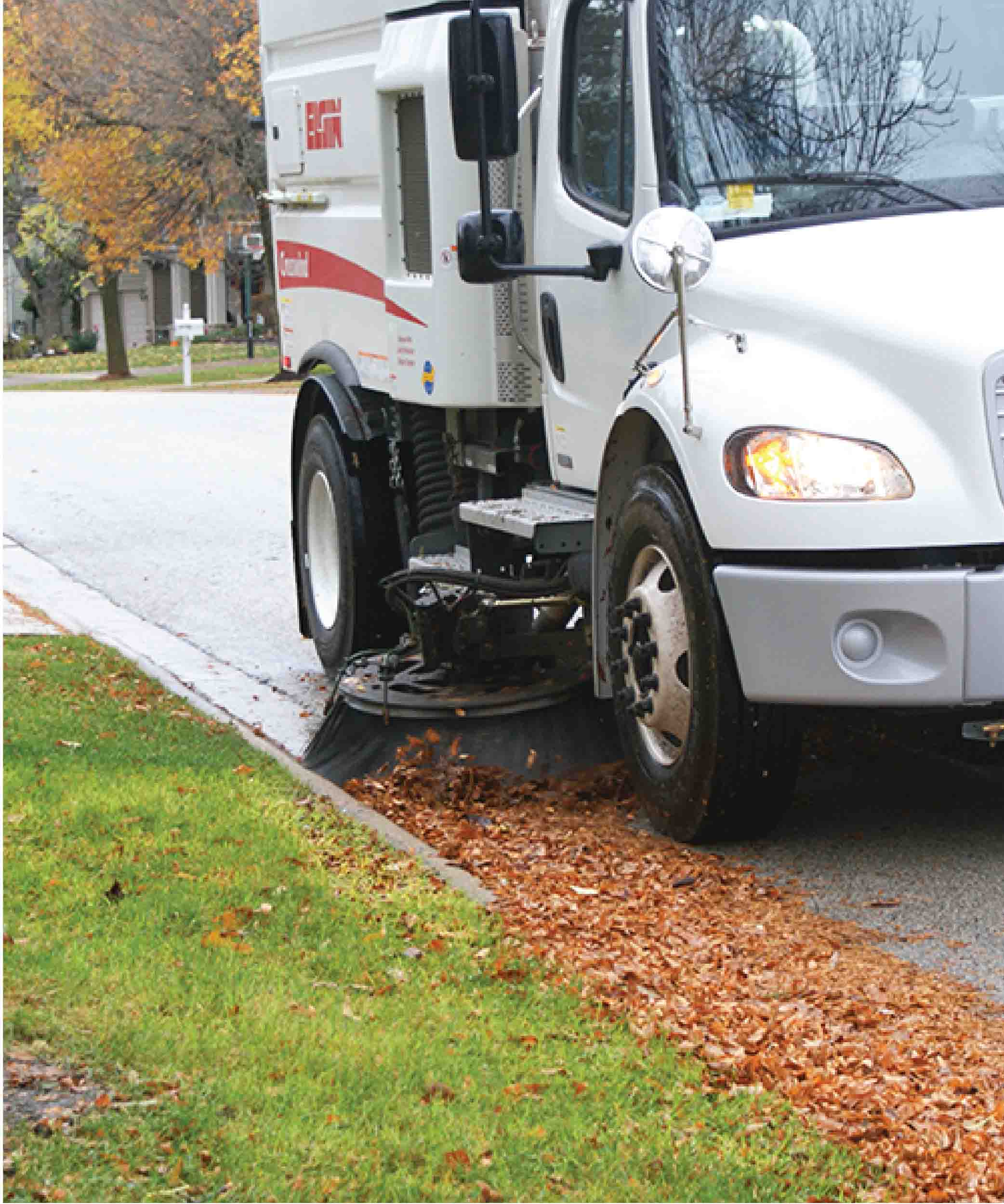
Wear items that make or break sweeper uptime
Brooms
Brooms are the fastest wearing part on any sweeper. Rotate and replace broom segments on schedule, and keep down pressure set so the broom sweeps with a light even contact strip rather than digging in. Too much pressure wears the broom and the drive, and too little leaves material on the road.
Dust suppression and filtration
On broom sweepers the water system controls dust, so clogged nozzles or a weak pump means a dusty route and a possible air quality problem. On regenerative air sweepers the filtration and fan do that job, so a dirty filter cuts pickup and strains the fan. Service both systems on schedule.
Hydraulics
Hydraulics drive the brooms, conveyor, and hopper. Keep the fluid clean, change filters on time, and fix small leaks before they become a failure. Contaminated hydraulic fluid is a leading cause of expensive sweeper repairs.
How to choose the right PM approach for your fleet
- If you run a single shift municipal route, build the PM calendar around weekly and monthly tasks with hour checks logged daily.
- If you run two shifts or contract sweeping, track auxiliary hours closely and shorten filter and broom intervals.
- If you operate a regenerative air sweeper, add fan and filter service to your monthly plan and watch pickup performance as an early warning.
- If you sweep heavy construction or industrial sites, expect faster broom and filter wear and inspect daily for packed debris.
- If you lack in house technicians, set up a scheduled service plan with your dealer so PM does not slip.
Frequently asked questions
How often should a street sweeper be serviced?
Do a pre trip and post trip check every shift, grease and inspect weekly, and service filters monthly. Follow the engine and auxiliary hour intervals in your model manual for oil and hydraulic service, since hours reflect real wear better than calendar dates.
What is the most common street sweeper repair?
Broom wear and dust suppression problems top the list because they take the hardest daily use. Hydraulic issues from dirty fluid or unaddressed leaks are the most expensive. A daily walkaround and on time filter service prevent most of these failures.
Should operators or technicians handle sweeper PM?
Both. Operators own the daily pre trip and post trip checks and the shift log. Technicians handle weekly grease, monthly filter service, and the hour based engine and hydraulic work. Splitting duties this way keeps small issues from turning into breakdowns.
How does PM affect sweeper resale value?
A documented PM history raises resale value and shortens the sale cycle. Buyers pay more for a sweeper with clean service records because the maintenance risk is lower and the remaining life is easier to judge.
The Bottom Line
Street sweeper preventive maintenance is not complicated, but it has to be consistent. Daily walkarounds catch the failures that strand a machine, weekly and monthly service protects the wear items, and hour based intervals keep the engine and hydraulics healthy. Track it, document it, and stock the right brooms and filters ahead of need. The payoff is fewer breakdowns, lower repair bills, and a sweeper that stays productive for more years. For maintenance safety, follow lockout and tagout practice before servicing (see OSHA 29 CFR 1910.147).
Why Buy Your Street Sweeper From Haaker Equipment Company
Haaker Equipment Company is the authorized Elgin street sweeper dealer for California, Arizona, and Nevada, backed by decades in municipal equipment, factory trained technicians, a full parts inventory, and service locations across the region. When you buy from Haaker, PM support and genuine parts are close by, so your sweeper stays on the route. Explore our Elgin broom sweepers and Elgin air sweepers, or request a demo or quote.
Call your nearest Haaker branch: Los Angeles 909-598-2706, San Diego 619-569-1946, Colton 909-370-2100, Central Valley 559-220-8897, Northern California 510-514-0043, Nevada 702-639-0156, and Phoenix 602-266-8214. You can also reach us through our contact page.