Sewer jetting is the most effective way to clean grease, root intrusion, sediment, and debris from pipe walls. But the equipment category spans a wide range — from compact trailer units a two-person crew can tow with a pickup, all the way to full combination jet/vac trucks that jet and vacuum at the same time. Getting the right configuration for your operation can mean the difference between a productive crew and one that’s fighting their equipment every day.
There are three primary sewer jetter configurations on the market today: trailer jetters, truck-mounted jetters, and combination jet/vac units. Each solves a different operational problem. Here’s how they compare and what to look for when you’re specifying one for your crew.
Trailer Jetters
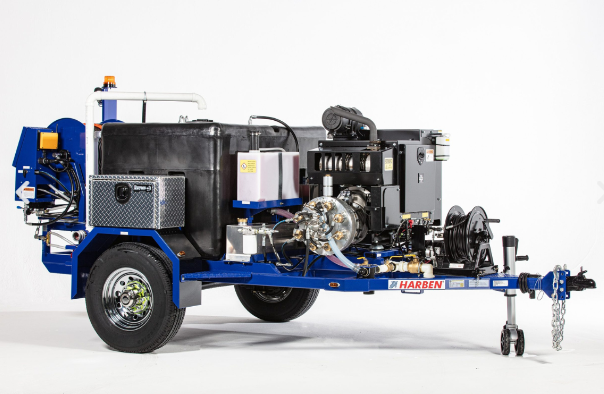
Trailer jetters are compact, self-contained jetting systems mounted on a trailer that can be towed by a standard pickup or light-duty truck. The unit typically includes a high-pressure water pump, a hose reel, and a water storage tank.
Trailer jetters are the entry point for contractors and municipalities adding jetting capability to their service mix without a major capital investment. They’re deployable with existing vehicles, easy to store, and practical for spot jetting, grease line maintenance, and residential service calls. For smaller operations running 4- to 10-inch diameter pipe, a quality trailer jetter handles the workload efficiently.
Best for: Plumbing contractors, small municipalities, and utility maintenance crews that run jetting on a part-time basis or as one service among several. If your crew doesn’t jet every day, a trailer jetter is typically the most cost-effective way to have the capability available without a dedicated truck.
Limitations: Smaller water tanks and lower hose reel capacity mean more frequent refills on long pipe runs and limited reach into large-diameter or long-distance mains. Not designed for combined jet/vac operation.
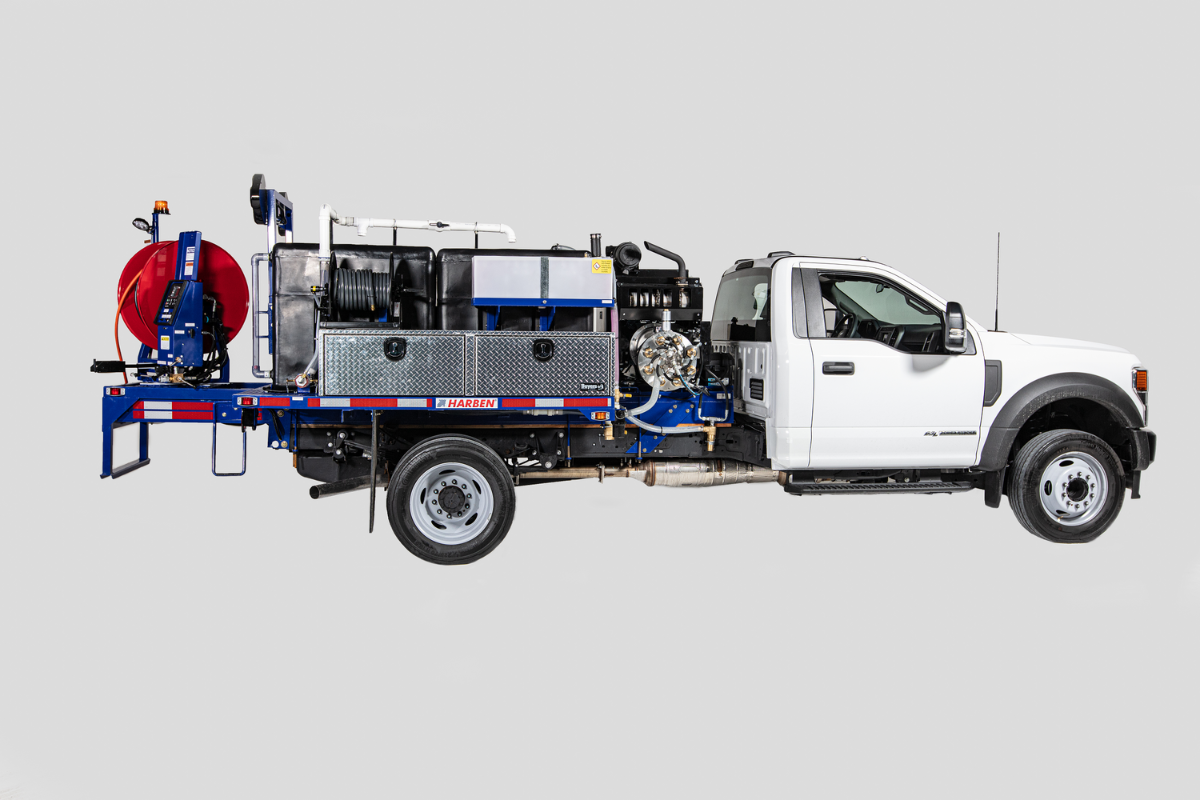
Truck-Mounted Jetters
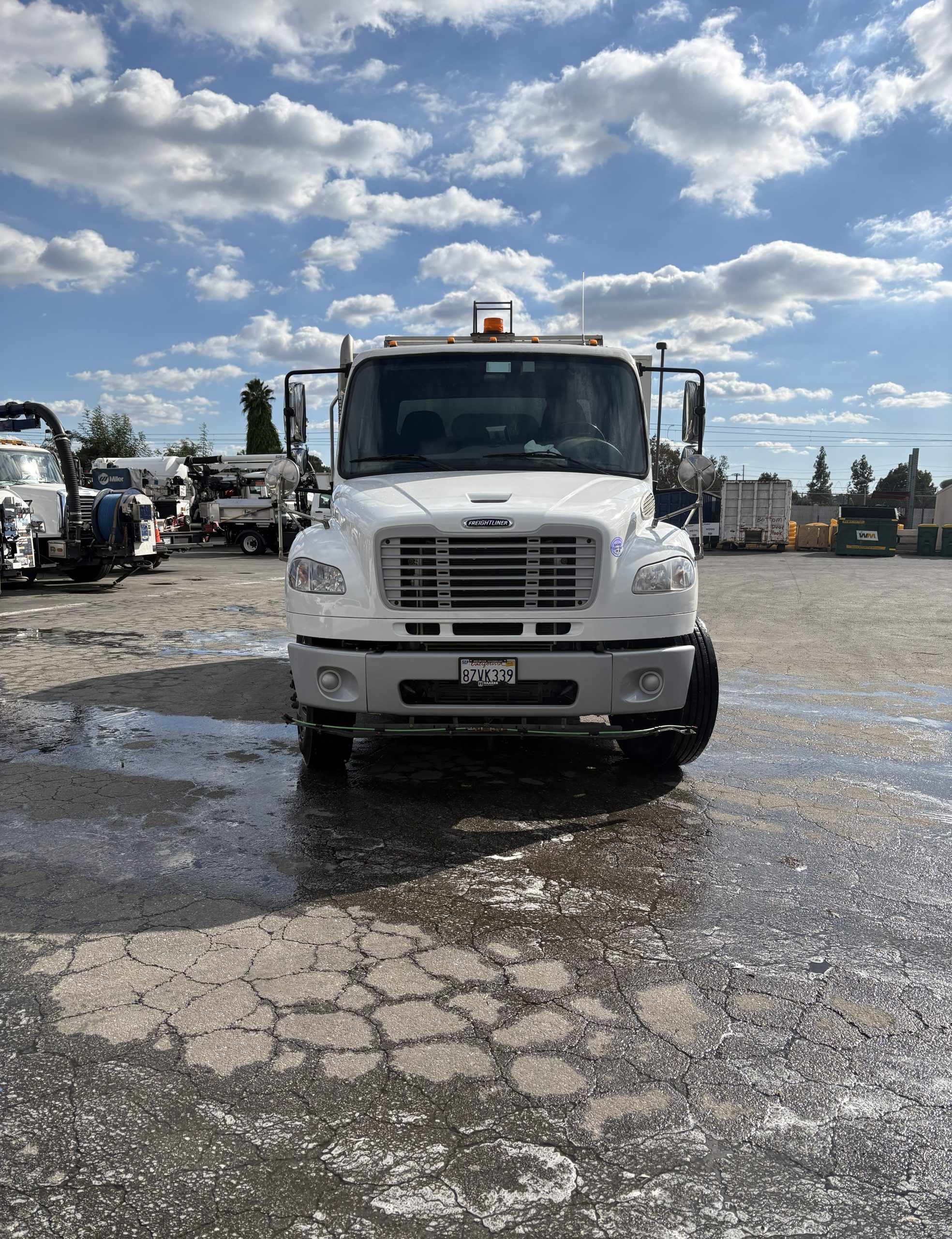
Truck-mounted jetters put the jetting system on a dedicated truck chassis, which enables larger water tanks, higher pressure and flow output, longer hose reels, and the ability to run larger diameter pipe. The Harben line of truck-mounted jetters represents the high-performance end of this category — built for municipal sewer main cleaning, industrial pipe maintenance, and continuous daily production work.
Truck-mounted jetters are the production workhorse for municipalities running scheduled sewer cleaning programs. Larger water capacity means longer uninterrupted runs. Higher pressure and flow handles root intrusion and hardened grease deposits that trailer jetters can’t break through. A dedicated truck platform also means the unit is always ready — no hitching and unhitching, no borrowed tow vehicle.
Best for: Municipal public works departments running planned sewer cleaning schedules, industrial facility maintenance operations managing large-diameter process piping, and contractors whose primary business is sewer cleaning and line maintenance.
Limitations: Truck-mounted jetters clean pipe but don’t vacuum debris. The material loosened by jetting flows downstream and must be managed separately. On lines where debris accumulation is heavy, this means either running a separate vacuum truck in tandem or accepting that loosened material will collect at a downstream point for later removal.
Combination Jet/Vac Units
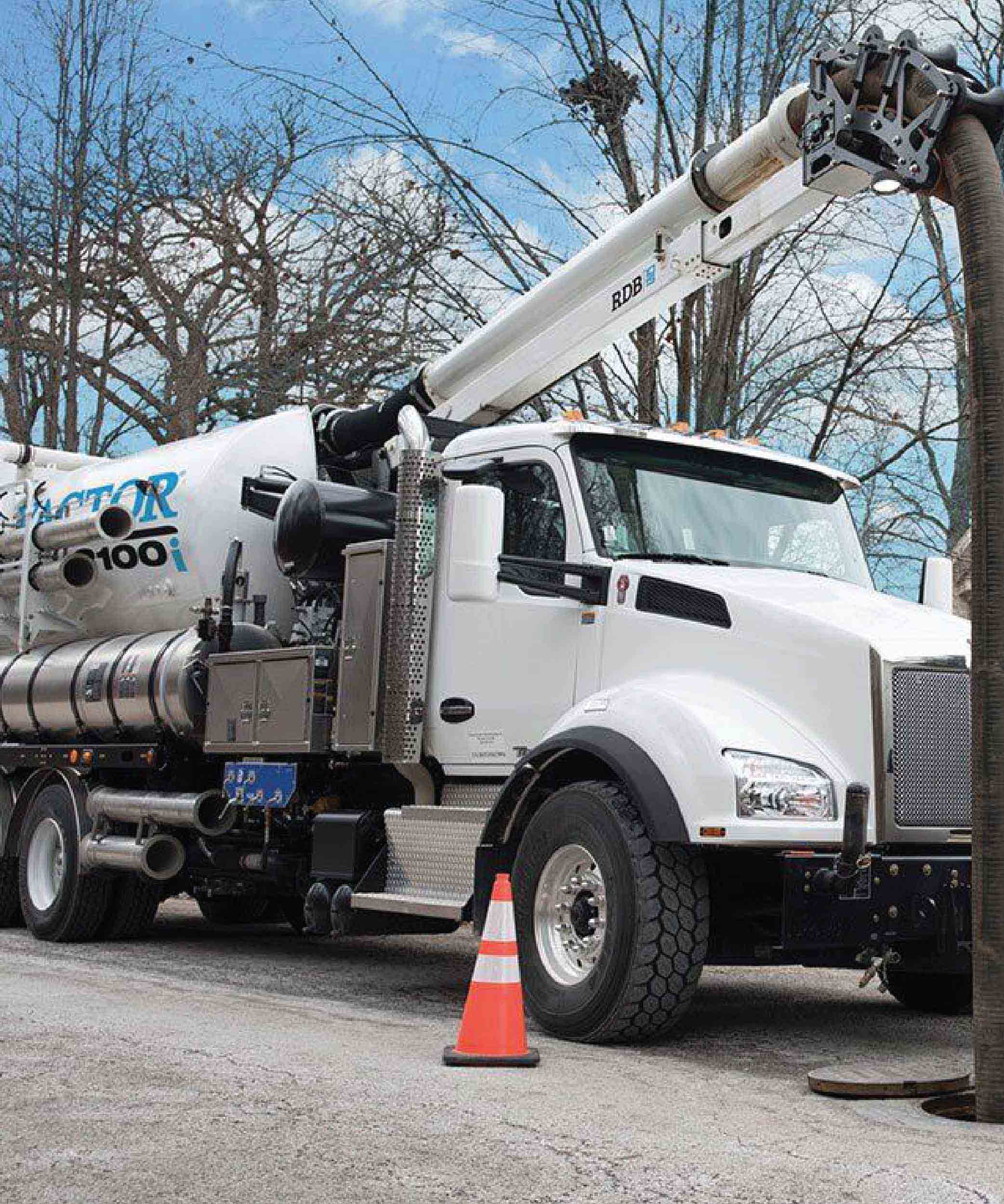
Combination units — like the Vactor combination sewer cleaners carried by Haaker Equipment — jet and vacuum simultaneously from a single truck. The jetter cleans the pipe wall while the vacuum system removes loosened material and water from the pipe in the same pass. One truck does the work that otherwise requires two.
Combination units are the most productive single piece of sewer cleaning equipment available for municipal operations. A single truck and two-person crew can clean a section of main and leave it cleared of debris without a follow-up vacuum truck pass. For municipalities managing large sewer networks on maintenance schedules, the combination unit reduces total truck and crew requirements for the same work output.
The Vactor combination units also support catch basin cleaning as part of the same workflow — the vacuum system handles sediment and debris removal from catch basins while the jetter handles lateral and main line cleaning. One truck, one crew, multiple services.
Best for: Municipal public works departments managing significant sewer networks. Contractors operating dedicated sewer cleaning service businesses where daily production rates drive profitability.
Limitations: Higher capital investment. The math works best for operations with consistent daily utilization. If your sewer cleaning work is light or sporadic, a simpler setup may be more cost-effective.
Side-by-Side Comparison
| Factor | Trailer Jetter | Truck-Mounted Jetter | Combination Jet/Vac |
|---|---|---|---|
| Setup required | Tow vehicle needed | Self-contained | Self-contained |
| Capital cost | Lowest | Moderate | Highest |
| Pipe diameter range | 4″–10″ typical | 4″–36″+ | 4″–36″+ |
| Debris removal | No | No | Yes — simultaneous |
| Catch basin cleaning | No | No | Yes |
| Best for daily production | No | Yes | Yes — most efficient |
| Best for occasional use | Yes | Limited | No |
| Crew required | 1–2 | 2 | 2 |
How to Choose The Right Sewer Jetting Equipment
Start with your daily work volume. If your crew jets a few lines per week as part of a broader maintenance scope, a quality trailer jetter is the right investment. If your crew jets every day on a scheduled maintenance program covering significant pipe mileage, a truck-mounted or combination unit is justified by the production efficiency.
Then look at your debris conditions. If the pipe network you’re maintaining has significant sediment accumulation, root intrusion, or grease loading that requires debris removal — not just flushing — a combination unit is the right tool. If the pipe is in relatively good condition and jetting alone restores flow, a truck-mounted jetter is sufficient.

Talk to the Haaker Team
Haaker Equipment carries trailer jetters, truck-mounted sewer jetters, and Vactor combination units and serves municipalities and contractors across California, Nevada, and Arizona.
Frequently Asked Questions
What is a sewer jetter?
A sewer jetter uses high-pressure water to clean the interior walls of sewer pipes, clearing grease, roots, sediment, and debris. Water is pumped at high pressure through a nozzle that rotates or blasts backward, propelling the nozzle through the pipe while cleaning the walls. Sewer jetters are available in trailer-mounted, truck-mounted, and combination jet/vac configurations.
What is the difference between a sewer jetter and a combination unit?
A sewer jetter cleans pipe walls with high-pressure water but does not remove the loosened debris from the pipe. A combination jet/vac unit both jets the pipe and vacuums the loosened material in the same pass, leaving the pipe cleaned and cleared in one operation. Combination units require one truck and crew where a jet-only approach requires two.
What size sewer jetter do I need?
Jetter sizing depends primarily on the pipe diameter range you’re cleaning and the daily production volume. Smaller trailer jetters typically handle 4- to 10-inch pipe. Truck-mounted units cover 4- to 36-inch diameter pipe and larger. Haaker Equipment can help match the right unit to your specific pipe network and work schedule.
Is a combination sewer cleaning truck worth the cost?
For municipal operations running daily or near-daily sewer cleaning schedules, combination units typically justify the higher purchase price through reduced crew requirements, eliminated vacuum truck operational costs, and higher daily production throughput. For lighter-use operations, a trailer or truck-mounted jetter is a more cost-effective entry point.
Haaker Equipment Company has served municipal, industrial, and contractor sewer maintenance operations across California, Nevada, and Arizona since 1972. Nobody works harder for you.