Choosing the Right Sewer Cleaning Truck Starts with Understanding Your Needs
If you’re responsible for managing sewer infrastructure — whether for a city, county, or private utility — you know that reliable cleaning equipment is essential to keeping things flowing. But with so many options on the market, how do you determine which sewer truck is the best fit for your team?
At Haaker Equipment Company, we help public works departments and contractors find the right Vactor Sewer Cleaning Truck for their operations. In this guide, we’ll walk through the key factors to consider when selecting a sewer truck for your fleet.
1. Understand Your Application Needs
Before diving into specs, it’s important to consider how and where your team will use the equipment.
Sanitary vs. Storm Sewers: Sanitary lines often require high-pressure jetting, while storm systems need strong vacuum power for sediment and catch basin debris.
Frequency of Use: Will this be a daily-use truck, or occasional backup?
Environmental Conditions: Do you work in narrow streets, steep terrain, or freezing temperatures?
By outlining your typical job requirements, you can narrow your focus to trucks built to handle those challenges.
2. Vacuum Power and Water Pressure: What to Look For
The core of any sewer cleaning truck is its ability to jet and vacuum effectively. Look for:
Water Pressure (PSI): Higher pressure (2500–3000 PSI) helps break through grease and roots.
Flow Rate (GPM): More gallons per minute equals faster cleaning of large diameter pipes.
Vacuum Power (CFM/HG): Strong vacuum is critical for lifting heavy sludge and debris quickly.
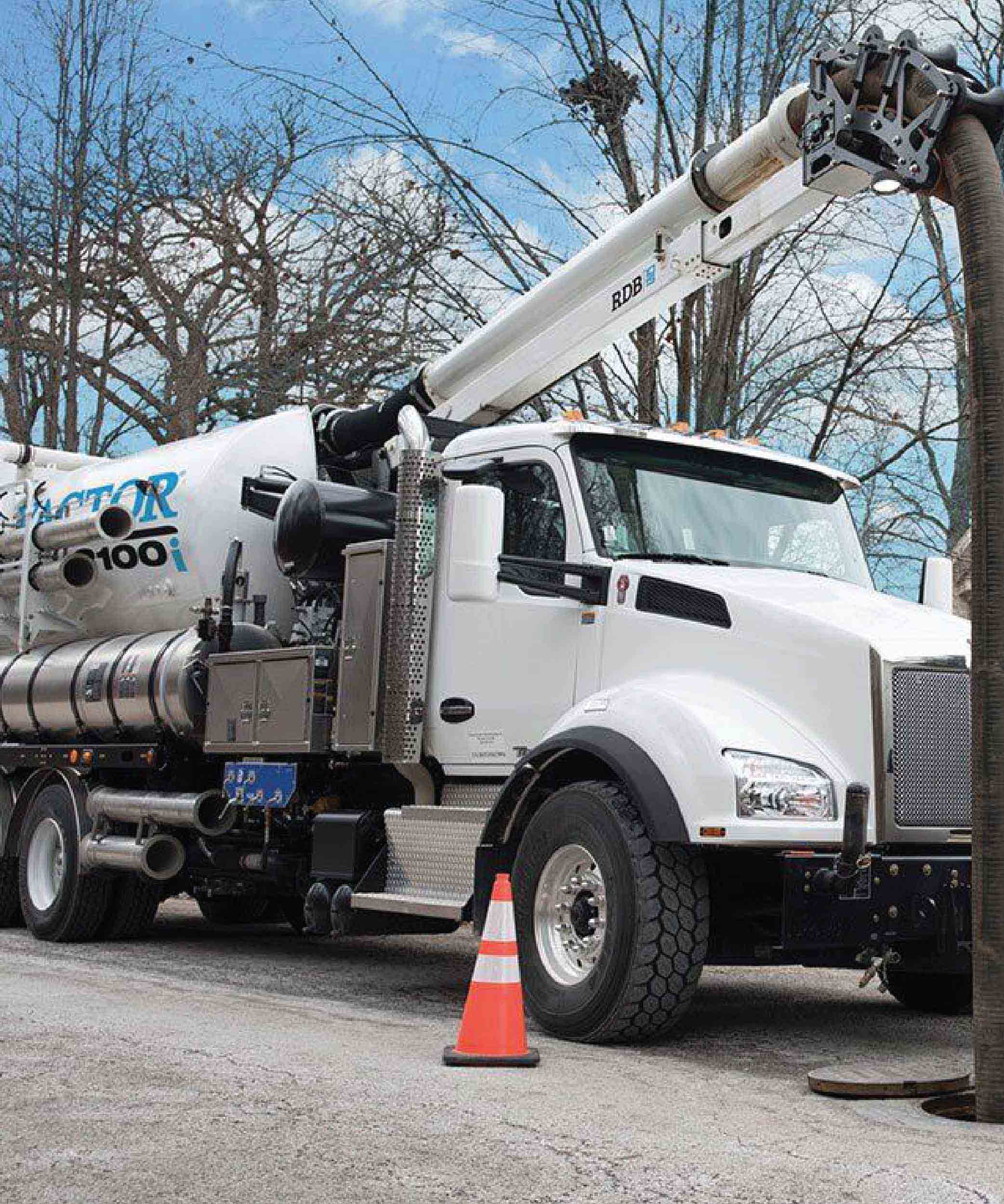
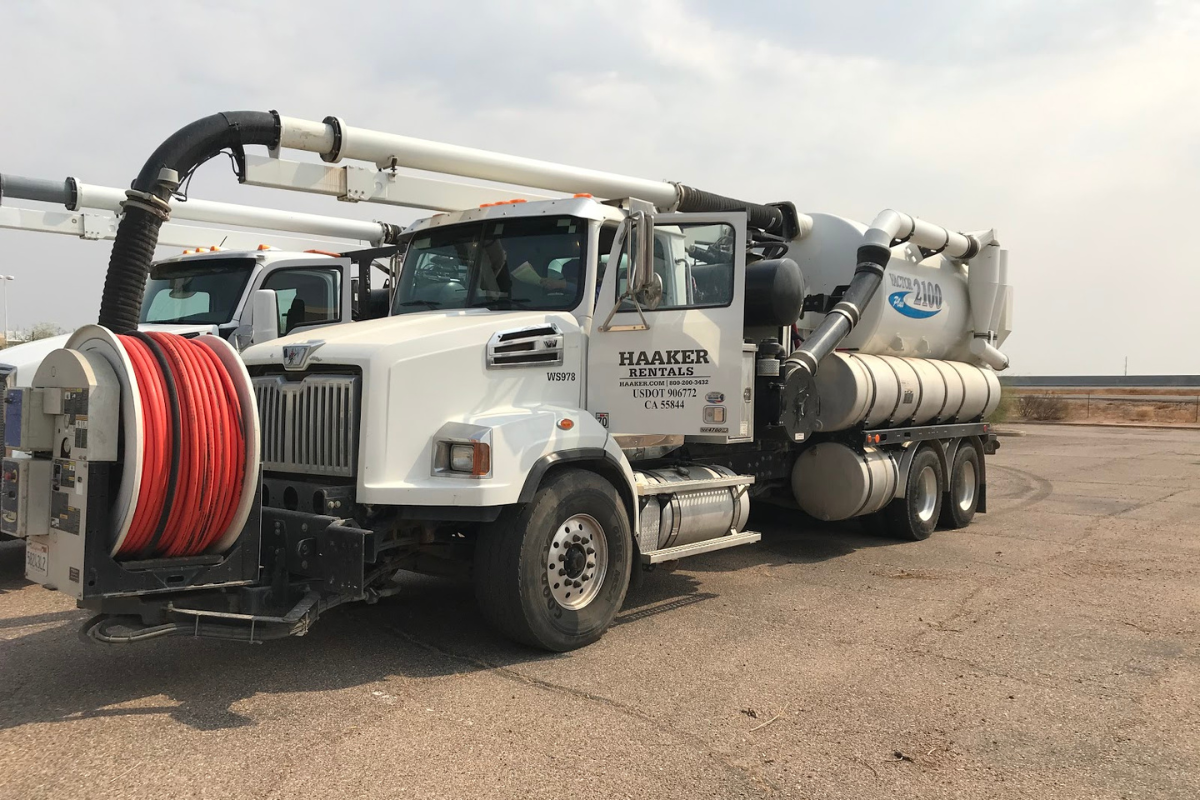
Vactor’s 2100i delivers industry-leading power with customizable jetting and vacuum capabilities.
3. Tank Size and Hose Reel Configuration
Tank size affects how long you can stay on the job without needing to stop and dump:
Debris Tanks: 10–15 cubic yards
Water Tanks: 1000+ gallons for longer jetting time
Hose Reel Location:
Front-mounted reels offer better visibility and ergonomics
Rear-mounted reels are more compact and can be safer in tight areas
Need help selecting the right setup? Contact our team for expert guidance.
4. Maneuverability and Chassis Considerations
Fleet managers working in urban environments often need trucks that can:
Navigate narrow alleys and intersections
Turn tightly without damaging property
Fit into constrained job sites or under low clearances
Vactor’s iMPACT model is designed for these environments, with a shorter wheelbase and compact design — while still packing the performance of a full-size truck.
5. Operator Controls and Ease of Use
Modern trucks should help your operators do more with less hassle. Vactor’s IntuiTouch™ control system simplifies training, improves safety, and reduces operational errors.
Large touchscreen interface
One-button start-up and shutdown
Intuitive boom and hose control
Faster training = more productivity = higher ROI for your fleet.
6. Maintenance Access and Serviceability
Downtime is costly. Look for:
Accessible service points
Corrosion-resistant water tanks
Modular boom designs for fast replacement or repair
At Haaker, we offer full parts and service support to help you minimize downtime and keep your equipment in top condition.
7. Why Choose Vactor Sewer Trucks?
Vactor has earned a reputation for durability, power, and innovation. With models like the 2100i and iMPACT, they deliver:
Reliable performance in demanding conditions
Advanced features that improve efficiency and safety
Long-term value and low total cost of ownership
Explore our current inventory of Vactor Sewer Cleaning Trucks or request a personalized quote today.
Ready to Talk Sewer Trucks?
Whether you’re replacing outdated equipment or expanding your fleet, Haaker Equipment Company is here to help. With years of experience in the field, we’ll match you with the right Vactor truck for your environment, your workload, and your budget.
Contact us now to schedule a demo or speak with our sewer equipment experts.
Frequently Asked Questions
What size sewer cleaning truck do I need?
That depends on your average pipe size, debris load, and service frequency. For large municipalities, a 15-yard debris tank is often ideal. Smaller cities may prefer a compact model like the Vactor iMPACT.
Can Vactor trucks be used for hydro excavation?
Yes. With the right accessories, many Vactor models double as hydro excavators — ideal for non-destructive digging and utility locating.
How often should a sewer truck be serviced?
Basic checks should be done daily. Full service intervals depend on usage, but Haaker offers maintenance programs to keep your fleet in peak condition.
Are there financing options available?
Yes. Contact Haaker for flexible purchasing options, including financing, leasing, and trade-in evaluations.
FREE CHECKLIST:
Download our Sewer Truck Buying Guide (PDF) — perfect for municipal RFPs or internal purchase reviews.